
In 1501, the Spanish crown made a decision that changed history: bringing enslaved Africans to its American colonies. This marked the start of centuries of forced labor, oppression, and cultural change that still impact the world today.
Table of Contents
- Introduction
- The Events of 1501: An Overview
- The Economic Impact
- Cultural and Social Repercussions
- Resistance and Adaptation
- Conclusion
- FAQs
- Sources
Introduction
In 1501, the first enslaved Africans were brought to Spain’s American colonies, marking the start of the transatlantic slave trade. This event shaped the social, economic, and cultural history of the New World and led to centuries of exploitation and oppression.
The Events of 1501: An Overview
Spanish Colonization Efforts in the New World
By the late 1400s, Spain was a leading maritime power, seeking new lands, wealth, and spreading Christianity. Columbus’s 1492 voyages opened the way to the Americas, with Hispaniola becoming one of Spain’s first colonies. Settlers established plantations and used the island’s resources.
At first, the Spanish relied on the indigenous Taíno people for labor. The Taíno were an Arawak-speaking people who lived on the island before the Spanish arrived. They had an organized society with villages called yucayeques and were skilled in farming, fishing, pottery, and weaving.
When the Spanish came, the Taíno population dropped sharply due to disease, forced labor, and violence. The Spanish also introduced the encomienda system, forcing the Taíno to work in mines and plantations under harsh conditions.
First Arrival of Enslaved Africans in Hispaniola
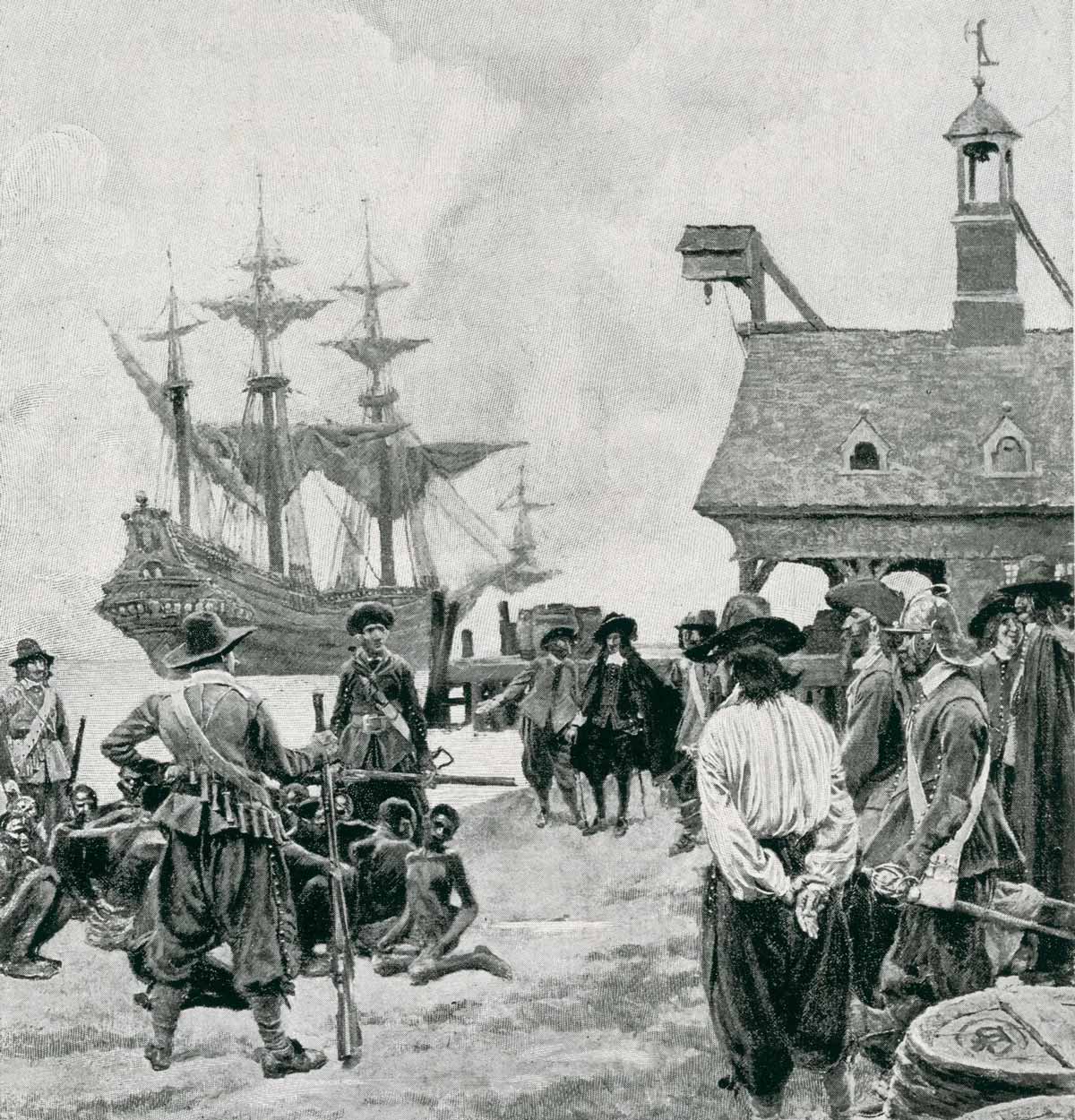
To address the labor shortage, King Ferdinand II of Aragon and Queen Isabella I of Castile allowed the importation of enslaved Africans to Hispaniola in 1501. This marked the start of the transatlantic slave trade. Unlike the indigenous people, Africans were more resistant to European diseases, making them the colonizers’ preferred labor force.
The Journey
Enslaved Africans faced a brutal journey called the Middle Passage. Captured in West Africa, they were shipped across the Atlantic in harsh conditions, with many dying during the voyage. This was part of the early transatlantic slave trade, which grew in the centuries that followed.
Integration into Colonial Economy
When they arrived, enslaved Africans were put to work on sugar plantations, in mines, and as domestic servants. They were key to the colonies’ economy but suffered greatly, losing their freedom and facing harsh conditions. This system of forced labor lasted for centuries and shaped the racial and social hierarchies in the Americas.
“History, despite its wrenching pain, cannot be unlived, but if faced with courage, need not be lived again.” – Maya Angelou
The Economic Impact
Labor Demands
Spanish settlers in the New World faced labor shortages as the indigenous Taíno population declined from disease and harsh working conditions. To meet the need for workers, especially on sugar plantations, in mining, and agriculture, the Spanish turned to enslaved Africans. Enslaved Africans provided a more durable workforce that could survive the tough conditions and diseases that had wiped out the indigenous people.
Economic Shifts
The shift from using indigenous labor to enslaving Africans had a huge impact on the colonial economy. Enslaved Africans helped expand plantation economies, especially sugar production, which became a major cash crop. This change boosted the colonies’ economy and created a system that relied on enslaved labor. It also led to racial hierarchies and social structures that lasted long after slavery ended.
Cultural and Social Repercussions
Demographic Changes
The arrival of Africans in the Spanish colonies caused big changes in the population. The number of enslaved Africans grew quickly and became a major part of the colonies. This mix of African, European, and indigenous people led to cultural exchanges that shaped language, music, food, and religion.
Social Hierarchies
Spanish colonial society was organized in a pyramidal hierarchy based on race and ancestry. At the top were the Peninsulares, Spaniards born in Spain, who had the most power and privilege. Below them were the Creoles, Spaniards born in the colonies, who often resented the Peninsulares for their special treatment.
Below the Creoles were mixed-race groups like Mestizos (mixed European and indigenous ancestry) and Mulattoes (mixed European and African ancestry). These groups were in the middle of the social structure and often faced discrimination and fewer opportunities than those of pure European descent.
At the bottom of the hierarchy were indigenous people and enslaved Africans. Indigenous people were forced to work and had few rights, while enslaved Africans lived in brutal conditions and were treated as property.
These racial hierarchies created a strict social structure that affected everything, from jobs to social interactions. The system kept inequality and discrimination in place, creating lasting divisions even after colonial rule ended.
Resistance and Adaptation
Indigenous Resistance
Indigenous groups resisted Spanish colonization through armed conflict and alliances. For example, the Mapuche in Chile and the Guaraní in Paraguay fought the Spanish for centuries, using guerrilla tactics and teaming up with other groups to resist Spanish control.
Enslaved Africans’ Resistance
Enslaved Africans resisted in several ways:
- Rebellions: Notable uprisings include the St. John’s Slave Rebellion in 1731 in Puerto Rico and the Haitian Revolution (1791-1804), which made Haiti the first independent black republic.
- Maroon Communities: Escaped enslaved Africans formed maroon communities like the Palenques in Colombia and Quilombo dos Palmares in Brazil. They often fought back with guerrilla tactics.
- Cultural Retention: Enslaved Africans kept their cultural practices, languages, and traditions, helping them resist cultural assimilation and maintain their identity.
Economic Resistance
Enslaved and indigenous workers also resisted economically by working slowly, pretending to be sick, or sabotaging equipment. These small acts of defiance helped them push back against exploitation by reducing productivity on plantations and in mines. This led to lower outputs of cash crops like sugar, tobacco, and gold, which were crucial to the colonial economy. Colonial authorities and plantation owners had to spend more to control the labor force, including costs for security, surveillance, and punishment, which drained the colonies’ resources.
Resistance led to labor shortages as enslaved people and indigenous workers escaped to maroon communities or refused to work. This forced colonial powers to keep bringing in more enslaved Africans, raising costs and making it harder to maintain a stable labor force. Ongoing resistance caused social instability in the colonies. Rebellions and uprisings disrupted daily life, creating fear and tension that discouraged investment and economic growth.
These forms of resistance caused immediate economic costs but also led to long-term changes in the colonies. The ongoing struggle for control and high death rates among enslaved workers eventually changed labor practices and led to the decline of the plantation economy in favor of other industries.
Wars of Independence
In the early 1800s, Spanish American colonies fought for independence from Spain. The Spanish American wars of independence (1808-1833) were a series of conflicts that led to independent nations in Latin America. These wars were fueled by a desire for political and economic freedom, inspired by Enlightenment ideas and the success of the American and French Revolutions.
Cultural Blending
African rhythms and dance greatly shaped local music and dance. Genres like salsa, samba, and jazz all have African roots. African drumming and dance became part of local celebrations and religious ceremonies, creating a rich cultural mix.
African cooking methods and ingredients were added to local cuisines, leading to dishes that are now common in many cultures. For example, okra, plantains, and some spices come from African cooking traditions.
African spiritual beliefs mixed with indigenous and European traditions, forming syncretic religions like Vodou, Santería, and Candomblé. These religions combine African gods with Catholic saints and rituals, creating unique spiritual practices.
African languages shaped creole languages and added to the region’s linguistic diversity. African words and phrases became part of local dialects, enriching the vocabulary.
African artistic styles were adopted by local artisans, seen in the patterns and designs in textiles, pottery, and crafts. African motifs were blended into local art, creating a unique mix of styles.
African social practices, like communal living and group decision-making, influenced the colonies’ social structures. These practices helped build a strong sense of community among enslaved Africans and their descendants.
Conclusion
The arrival of enslaved Africans in Spain’s American colonies in 1501 marked the start of the transatlantic slave trade, setting off a series of changes that would shape history. This event helped address the labor shortages in industries like sugar plantations and mining, boosting the colonial economy but at a great human cost, leading to lower productivity and more resistance.
The reliance on enslaved labor created strict racial hierarchies, with Peninsulares at the top, followed by Creoles, Mestizos, and Mulattoes, and indigenous people and enslaved Africans at the bottom. This system laid the foundation for centuries of inequality and discrimination in the Americas.
Despite their suffering, enslaved Africans contributed greatly to the cultural mix of the colonies. Their music, dance, food, religion, language, and crafts blended with those of indigenous people and Europeans, creating a rich cultural heritage that still influences the Americas today.
Enslaved Africans showed strong resistance, from uprisings to forming maroon communities and keeping their cultural traditions alive. These actions impacted the colonial economy and helped set the stage for future fights for freedom and civil rights.
Understanding this history is key to ongoing discussions about race, identity, and power that still matter today. The legacy of the transatlantic slave trade continues to shape modern society, and recognizing the strength and contributions of enslaved Africans is important in addressing past injustices and building a more inclusive future.
Frequently asked questions about enslaved Africans arriving in Spain’s American colonies
- What year did enslaved Africans first arrive in Spain’s American colonies?
- Enslaved Africans first arrived in Spain’s American colonies in 1501, brought to Hispaniola to work on Spanish plantations and in mines.
- Which Caribbean island did they primarily land on?
- Enslaved Africans mainly arrived on Hispaniola, now Haiti and the Dominican Republic. This island was one of the first major sites for the arrival and exploitation of enslaved Africans in the Spanish colonies.
- What were some of the reasons enslaved Africans were brought to the colonies?
- Enslaved Africans were brought to the Spanish colonies to fill labor shortages caused by the sharp decline of the indigenous population from disease, harsh conditions, and warfare. To meet the demand for workers, they were forced to work on plantations, in mines, and in other industries. The need for labor was especially high in sugar production, which became a major cash crop.
- How did this event impact social structures in the colonies?
- The arrival of enslaved Africans in 1501 created strict racial hierarchies in the colonies, with Europeans at the top and enslaved Africans at the bottom. This shaped social structures, leading to long-lasting inequality and a mix of cultures.
- What forms did resistance take among enslaved Africans?
- Enslaved Africans resisted by organizing rebellions, escaping to form maroon communities, and using everyday acts of defiance, like working slowly or sabotaging equipment. These actions helped them assert their agency and challenge their oppression.
Sources
- Taylor, Quintard. America I AM Black Facts: The Timelines of African American History, 1601-2008. United States: Hay House, 2009.
- Thomas, Hugh. The Slave Trade: The Story of the Atlantic Slave Trade: 1440-1870. United Kingdom: Simon & Schuster, 2013.
- From the Galleons to the Highlands: Slave Trade Routes in the Spanish Americas. United States: University of New Mexico Press, 2020.
- Restall, Matthew. The Black Middle: Africans, Mayas, and Spaniards in Colonial Yucatan. United States: Stanford University Press, 2009.
- Scarano, Francisco Antonio. Sugar and slavery in Puerto Rico: the plantation economy of Ponce, 1800-1850. United Kingdom: University of Wisconsin Press, 1984.
- Klein, Herbert S.., Vinson, Ben., Vinson, Ben. African Slavery in Latin America and the Caribbean. United Kingdom: Oxford University Press, 2007.
- Borucki, Alex, and David Eltis and David Wheat. 2015. “Atlantic History and the Slave Trade to Spanish America.” The American Historical Review 120 (2): 433–61. https://www.jstor.org/stable/43696678.
- “The Early Trans-Atlantic Slave Trade: Nicolas Ovando · African Laborers for a New Empire: Iberia, Slavery, and the Atlantic World · Lowcountry Digital History Initiative.” n.d. https://ldhi.library.cofc.edu/exhibits/show/african_laborers_for_a_new_emp/early_trans_atlantic_slave_tra.
- “Unit 2 Africa, Europe, and the Rise of Afro-America, 1441-1619 – New Jersey State Library.” 2024. New Jersey State Library. July 18, 2024. https://www.njstatelib.org/research_library/new_jersey_resources/highlights/african_american_history_curriculum/unit_2_rise_of_afro-americans/.
- “Atlantic Slave Trade (The).” n.d. Encyclopédie D’histoire Numérique De L’Europe. https://ehne.fr/en/encyclopedia/themes/europe-europeans-and-world/europe-and-atlantic-slave-trade/atlantic-slave-trade.
- “Timeline | First Blacks in the Americas.” n.d. http://www.firstblacks.org/en/summaries/timeline/.
- Smith, Sabrina. 2024. “Slavery and the African Diaspora in Spanish America.” Oxford Research Encyclopedia of African History, April. https://doi.org/10.1093/acrefore/9780190277734.013.1406.
- Wikipedia contributors. 2024. “Slavery in Colonial Spanish America.” Wikipedia. November 9, 2024. https://en.wikipedia.org/wiki/Slavery_in_colonial_Spanish_America.
- Wikipedia contributors. 2024. “Spanish American Wars of Independence.” Wikipedia. December 2, 2024. https://en.wikipedia.org/wiki/Spanish_American_wars_of_independence.
- Wikipedia contributors. 2024. “1521 Santo Domingo Slave Revolt.” Wikipedia. November 23, 2024. https://en.wikipedia.org/wiki/1521_Santo_Domingo_Slave_Revolt.
- Wikipedia contributors. 2024. “Hispaniola.” Wikipedia. November 27, 2024. https://en.wikipedia.org/wiki/Hispaniola.
- Wikipedia contributors. 2024. “Spanish Colonization of the Americas.” Wikipedia. December 1, 2024. https://en.wikipedia.org/wiki/Spanish_colonization_of_the_Americas.
- Williams, Caroline A. 1999. “Resistance and Rebellion on the Spanish Frontier: Native Responses to Colonization in the Colombian Chocó, 1670-1690.” Hispanic American Historical Review 79 (3): 397–424. https://doi.org/10.1215/00182168-79.3.397.
- Knight, Kiana, and Christina Proenza-Coles. 2024. “Traditions of Resistance in the Black Diaspora.” AAIHS – African American Intellectual History Society. September 21, 2024. https://www.aaihs.org/traditions-of-resistance-in-the-black-diaspora/.
- “Caste and Class Structure in Colonial Spanish America | Encyclopedia.com.” n.d. https://www.encyclopedia.com/humanities/encyclopedias-almanacs-transcripts-and-maps/caste-and-class-structure-colonial-spanish-america.
- “Social Structure of the Spanish Colonies.” n.d. Smithsonian Learning Lab. https://learninglab.si.edu/collections/social-structure-of-the-spanish-colonies/Az7K7pzsxgRahMwn.
- “Understanding the Long-run Effects of Africa’s Slave Trades.” 2017. CEPR. February 27, 2017. https://cepr.org/voxeu/columns/understanding-long-run-effects-africas-slave-trades.
- “Haiti: Culture, Religion, and Revolution – Colonialism and Revolution.” n.d. Haiti: Culture, Religion, and Revolution. https://haiti.lasaweb.org/en/colonialism-and-revolution/.
- Magdoff, Harry, Richard A. Webster, and Charles E. Nowell. 2024. “Western Colonialism | Definition, History, Examples, & Effects.” Encyclopedia Britannica. October 30, 2024. https://www.britannica.com/topic/Western-colonialism/Spains-American-empire.
© 2026 Chandra Martin. All Rights Reserved.
All original research, writing, analysis, and historical synthesis on this site is the intellectual property of Chandra Martin. This content may not be copied, reproduced, republished, distributed, adapted, or used in any form—digital or print—without prior written permission from the author.
Limited quotation for academic or educational purposes is permitted only if proper credit is given and the use does not alter the meaning, context, or integrity of the work.
To request permission for use in publications, videos, courses, educational materials, or digital media, please
contact:
Contact
Include:
- Your name
- The specific content you wish to use
- How and where it will be used
- Whether the use is commercial or non-commercial
All requests will be reviewed on a case-by-case basis.
 Chandra Martin