

The Crown of Thorns, a revered Christian relic, is believed to have been worn by Jesus Christ during his crucifixion. Acquired by King Louis IX in 1239, it is now housed in Notre Dame Cathedral, Paris. Despite a 2019 fire, it survived and remains a symbol of faith and sacrifice.
Table of Contents
- Introduction
- Historical Background
- The Journey of the Relic
- Symbolism and Significance
- Miracles and Legends
- Contemporary Relevance
- Conclusion
- FAQs
- Sources
Introduction
The Crown of Thorns is a relic in Christianity, believed to have been worn by Jesus during his crucifixion. This relic has a rich history, from its origins in Jerusalem to being housed in Notre Dame Cathedral in Paris. Despite challenges, including a major fire in 2019, it remains a symbol of faith and reverence for Christians worldwide.
The Crown of Thorns holds significance in the Christian faith. It symbolizes the suffering and sacrifice he endured for humanity’s salvation. For Christians, the Crown of Thorns is a powerful reminder of Jesus’ love, humility, and the immense pain he endured for the redemption of mankind. It inspires believers to reflect on the depth of Jesus’ sacrifice and their own spiritual journey.
Historical Background
The origins of the Crown of Thorns relic trace back to Jerusalem, where it is believed to have been placed on Jesus’ head during his crucifixion. The earliest mentions of the relic date back to the 5th century. Paulinus of Nola, writing after 409, referred to the thorns with which Jesus was crowned as relics held in honor along with the Cross and the Pillar at which he was scourged. Cassiodorus (c. 570) also mentioned the Crown of Thorns among the relics of Jerusalem, describing it as a symbol of the world’s thorns gathered and broken.
In Matthew 27:29, the account of the Passion of Christ details the mocking of Jesus by Roman soldiers before his crucifixion. This verse specifically describes how they “twisted together a crown of thorns and set it on his head. They put a staff in his right hand. Then they knelt in front of him and mocked him, saying, ‘Hail, King of the Jews!’” This act of mockery aimed to ridicule Jesus’ claim to kingship and to inflict pain and humiliation on him.
The Journey of the Relic
Empress Helena is believed to have discovered the Crown of Thorns during her pilgrimage to the Holy Land in the early 4th century, around 326-328 AD. According to tradition, she discovered the Crown of Thorns in Jerusalem, where it was likely kept in the Basilica of Mount Zion, as the crown that Jesus wore during his crucifixion. Later, around the mid-11th century, it was moved to Constantinople (now Istanbul) and safeguarded in the imperial chapel.
In 1238, facing a dire financial situation, the Latin Emperor Baldwin II of Constantinople pawned the relic to Venetian bankers to secure a loan. At the urging of Emperor Baldwin II, his cousin, French King Louis IX, purchased the Crown of Thorns for a substantial sum, and brought it to Paris where it was housed the Notre Dame Cathedral in 1239.

The Crown of Thorns was broken into pieces and distributed to various churches around the world in 1801. After the French Revolution, the relic was kept in the National Library before being moved back to Notre Dame Cathedral. To make it more accessible to the faithful, the thorns were removed and sent to different churches, including Saint Peter’s Basilica in Rome.
Symbolism and Significance
The Crown of Thorns is a symbol of Christ’s suffering and sacrifice. Placed on Jesus’ head by Roman soldiers during his crucifixion, it was meant to mock his claim to kingship but resulted in intense physical pain. For Christians, the crown represents the profound physical and emotional agony Jesus endured. It serves as a reminder of his ultimate sacrifice for humanity’s sins. The thorns symbolize the burden of sin he bore, and the crown itself underscores his role as a suffering servant and the true King of Heaven, embodying humility and redemption.
In liturgical practices, it features prominently during Holy Week, particularly on Good Friday, when Christians commemorate the Passion of Christ. In Christian art, the Crown of Thorns is frequently depicted in scenes of the Passion, especially the Crucifixion. Artists have portrayed it in various styles, from realistic to symbolic, emphasizing its importance in the narrative of Jesus’ final hours. The image of the crown evokes deep emotional responses, reminding believers of Jesus’ ultimate act of love and the hope it brings.
The Crown of Thorns is a recurring symbol in numerous masterpieces, from early Christian iconography to Renaissance paintings and beyond. Artists like Albrecht Dürer, Caravaggio, and Vincent van Gogh have depicted it, each bringing their unique interpretation to the symbol of Christ’s suffering and redemption.
In literature, the Crown of Thorns has inspired countless works, including hymns, poems, and stories. It often represents themes of sacrifice, suffering, and redemption, resonating with the core messages of the Christian faith. The symbol has been used in both religious texts and secular works to convey emotional and spiritual significance.
Culturally, the Crown of Thorns is an emblem of faith, influencing religious practices and traditions worldwide. It serves as a reminder of the Passion of Christ and the offering of his life, reinforcing the values of love, humility, and devotion in Christian communities.
Miracles and Legends
In April 2019, the Crown of Thorns survived a raging fire in the Notre Dame Cathedral. During the blaze, firefighters and police officers formed a human chain to rescue the relic, along with other precious artifacts, from the flames. The Crown of Thorns, encased in a gilded golden tube, was saved thanks to their quick actions and bravery. This event has been described as a “modern miracle” and has deepened the relic’s significance for many believers.
There is a legend about a single thorn from the Crown of Thorns that is believed to still bleed. This thorn is kept in a reliquary at the cathedral in Andria, Italy. According to tradition, the thorn bleeds every Good Friday when March 25th coincides with Good Friday. This phenomenon has been recorded since 1633 and has occurred several times, with the most recent bleeding happening in 2016. The next occurrence is expected in 2157. This event is seen by many as a miracle and a sign of God’s love and presence. It draws pilgrims and believers from around the world who come to witness and venerate the relic.
Contemporary Relevance
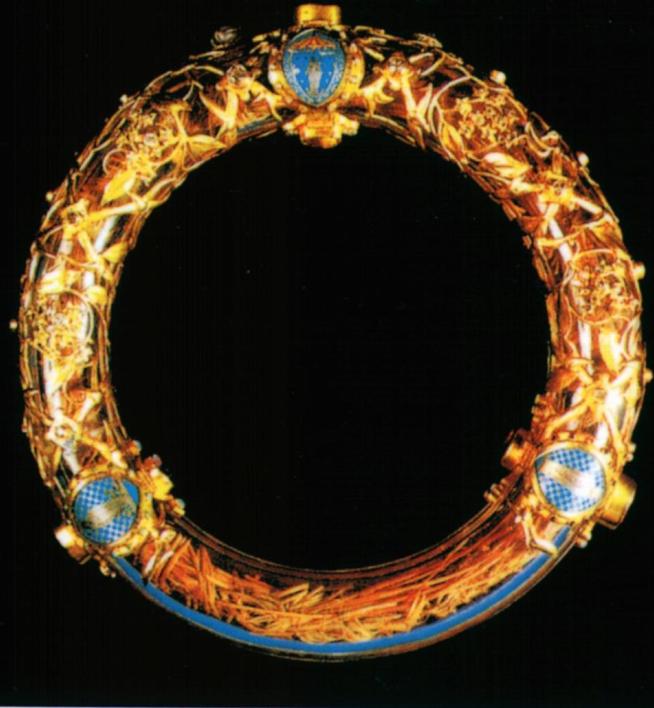
The Crown in Modern Christianity
The Crown of Thorns continues to be a source of faith and devotion for Christians worldwide. It’s a reminder of Jesus’ suffering and sacrifice that resonates with believers, inspiring them to reflect on Christ’s love and the sacrifices he made for humanity’s salvation.
In churches and cathedrals where pieces of the relic are housed, it draws pilgrims who come to venerate and meditate on the Passion of Christ. During Holy Week, especially on Good Friday, the Crown of Thorns is a focal point in liturgical ceremonies, reinforcing the story of Jesus’ crucifixion.
In personal devotion, the image of the Crown of Thorns encourages Christians to contemplate the themes of humility, selflessness, and deliverance. It is a reminder of the cost of salvation and the enduring love of Jesus. This connection to the core tenets of Christianity helps believers strengthen their faith and commitment to living out the teachings of Christ.
Notable Events and Exhibitions
The oldest notable event is the Feast of the Crown of Thorns. It is a feast day in the Roman Catholic Church celebrated on the Friday after Ash Wednesday. It was first instituted in Paris in 1239 when King Louis IX brought the relic to the city. The feast commemorates the Crown of Thorns placed on Jesus’ head during his crucifixion and is observed with special Masses and prayers.
In parts of Spain, Germany, and Scandinavia, the Feast of the Invention of the Cross, also known as the Exaltation of the Holy Cross, is celebrated on September 14th (or September 27th for those using the Julian calendar). This feast commemorates the discovery of the True Cross by Empress Helena in the early 4th century, as well as the dedication of the Church of the Holy Sepulchre in Jerusalem by Emperor Constantine. The day is marked by special Masses and prayers, and it serves as a reminder of the significance of the cross in Christian faith. It is celebrated by various Christian denominations, including Roman Catholics, Eastern Orthodox, and Anglicans.
The most notable event of the 21st century featuring the Crown of Thorns was its return to Notre Dame Cathedral in Paris on December 13, 2024. This marked five-and-a-half years after a devastating fire ravaged the cathedral. The return ceremony was attended by over 400 members of the Equestrian Order of the Holy Sepulchre, who participated in a procession to bring the relic back to its rightful place.
An upcoming exhibit is the public veneration of the Crown of Thorns at Notre Dame Cathedral, which is set to begin on January 10, 2025. The relic will be displayed for public veneration every Friday until April 18, 2025, culminating on Good Friday. This will allow believers from around the world to come and pay their respects, deepening their connection to this sacred symbol of Christ’s suffering and sacrifice.
Conclusion
The Crown of Thorns has history and significance in Christian tradition. Discovered by Empress Helena in the early 4th century, it was initially kept in Jerusalem before being moved to Constantinople. Latin Emperor Baldwin II later pawned it to Venetian bankers, and King Louis IX of France bought and brought it to Notre Dame Cathedral in Paris in 1239.
Over the centuries, the Crown of Thorns has inspired countless works of art, literature, and devotion. It represents Christ’s suffering and sacrifice, serving as a symbol in Christian faith. Notable events include its survival of the devastating fire at Notre Dame in 2019, often seen as a modern miracle. Additionally, there are legends of a thorn from the crown that still bleeds under specific conditions, further adding to its allure.
From its role in liturgical practices to its portrayal in art, the Crown of Thorns inspires faith and devotion among Christians worldwide. Its journey, miracles, and legends all contribute to its importance.
“How could I bear a crown of gold when the Lord bears a crown of thorns? And bears it for me!” – Elizabeth of Hungary
Frequently asked questions about the Crown of Thorns
- What is the Crown of Thorns?
- The Crown of Thorns is a relic believed to be the crown placed on Jesus Christ’s head during his crucifixion, symbolizing his suffering and sacrifice. It is a significant artifact in Christian tradition and has been venerated for centuries.
- Where is the Crown of Thorns located today?
- The Crown of Thorns is currently located at Notre Dame Cathedral in Paris. It was returned there in December 2024 after being saved from the devastating fire in 2019.
- Is the Crown of Thorns mentioned in the Bible?
- Yes, the Crown of Thorns is mentioned in the Bible. It appears in the New Testament Gospels of Matthew, Mark, and John, where Roman soldiers place it on Jesus’ head to mock him as the “King of the Jews” during his crucifixion.
- Why is the Crown of Thorns significant to Christians?
- The Crown of Thorns is significant to Christians because it symbolizes Jesus Christ’s suffering, sacrifice, and love for humanity. It serves as a poignant reminder of the pain he endured during his crucifixion and his ultimate act of redemption for the sins of humankind.
- Are there any festivals or events related to the Crown of Thorns?
- Yes, there are several festivals and events related to the Crown of Thorns. One notable event is the Feast of the Crown of Thorns, which is observed on the Friday following Ash Wednesday. This feast was first instituted in Paris in 1239 when King Louis IX brought the relic to the city. Another related event is the Feast of the Invention of the Cross, celebrated in parts of Spain, Germany, and Scandinavia, often alongside the Feast of the Crown of Thorns.
Sources
- Calvin, Jean. A Treatise on Relics. United Kingdom: Johnstone and Hunter, 1854. (Internet Archive)
- Passionist Father. “Mystery of the Crown of Thorns.” New York: P. J. Kenedy, 1879. (Internet Archive)
- St J Hart, H. 1952. “THE CROWN OF THORNS IN JOHN 19, 2–5.” The Journal of Theological Studies III (1): 66–75. https://doi.org/10.1093/jts/iii.1.66.
- Stewart, William R. 2006. “Crown of Thorns: Ancient Prophecy and the (Post)Modern Spectacle.” http://www.academia.edu, January. https://www.academia.edu/12218164/Crown_of_Thorns_Ancient_Prophecy_and_the_Post_Modern_Spectacle.
- Bible History Online. 2019. “The Crown of Thorns – Interesting Facts.” https://www.youtube.com/watch?v=AWNsqyW34DM.
- Course Bible. 2023. “From Mockery to Majesty: The Powerful Symbolism of the Crown of Thorns.” https://www.youtube.com/watch?v=eGRez7_KzaQ.
- “History and Authenticity of the Relic of the Crown of Thorns.” 2019. https://www.johnsanidopoulos.com/2019/04/history-of-relic-of-crown-of-thorns.html.
- “Matthew 27:29-30 (NIV).” n.d. Bible Gateway. https://www.biblegateway.com/passage/?search=Matthew+27%3A29-30&version=NIV.
- Ryan, Joel. 2024. “What Is the Meaning and Importance of Jesus’ Crown of Thorns?” christianity.com. March 22, 2024. https://www.christianity.com/wiki/holidays/what-is-the-significance-of-the-crown-of-thorns.html.
- The Editors of Encyclopaedia Britannica. 2024. “Crown of Thorns | Relic & History.” Encyclopedia Britannica. December 17, 2024. https://www.britannica.com/topic/Crown-of-Thorns-religious-relic.
- Wikipedia contributors. 2024. “Crown of Thorns.” Wikipedia. December 14, 2024. https://en.wikipedia.org/wiki/Crown_of_thorns.
- Wikipedia contributors. 2024. “Feast of the Cross.” Wikipedia. October 24, 2024. https://en.wikipedia.org/wiki/Feast_of_the_Cross.
- Wikipedia contributors. 2024. “Feast of the Crown of Thorns.” Wikipedia. July 4, 2024. https://en.wikipedia.org/wiki/Feast_of_the_Crown_of_Thorns.
- Answers, Catholic. 2019. “Feast of the Crown of Thorns.” Catholic Answers. February 22, 2019. https://www.catholic.com/encyclopedia/feast-of-the-crown-of-thorns.
- Williams, Amanda. 2024. “What Was Jesus’ Crown Made of? A Detailed Look at the Materials Used – Christian Website.” Christian Website (blog). March 19, 2024. https://www.christianwebsite.com/what-was-jesus-crown-made-of/.
- “How Jesus’ Crown of Thorns Ended up at Notre Dame.” 2024. Aleteia — Catholic Spirituality, Lifestyle, World News, and Culture. November 22, 2024. https://aleteia.org/2024/11/22/how-jesus-crown-of-thorns-ended-up-at-notre-dame.
- Weidenkopf, Steve. 2019. “The Story of the Crown of Thorns.” Catholic Answers. April 18, 2019. https://www.catholic.com/magazine/online-edition/the-story-of-the-crown-of-thorns.
- Answers, Catholic. 2019. “Crown of Thorns.” Catholic Answers. February 21, 2019. https://www.catholic.com/encyclopedia/crown-of-thorns.
- “8 Incredible Relics from the Holy Land That St. Helena May Have Found –Aleteia.” 2018. Aleteia — Catholic Spirituality, Lifestyle, World News, and Culture. August 18, 2018. https://aleteia.org/2018/08/18/8-incredible-relics-from-the-holy-land-that-st-helena-might-have-found.
- Kramer, Howard. 2019. “SEVEN THINGS ST. HELENA DISCOVERED (OR NOT).” The Complete Pilgrim – Religious Travel Sites. January 15, 2019. https://thecompletepilgrim.com/seven-things-st-helena-discovered-not/.
- Carney, Edward. 2024. “Does the Crown of Thorns Still Exist?” Geographic FAQ Hub: Answers to Your Global Questions. June 28, 2024. https://www.ncesc.com/geographic-faq/does-the-crown-of-thorns-still-exist/.
- Torres, Hazel. 2016. “Thorn relic from Jesus Christ’s ‘crown’ bleeds once again in another March 25 Good Friday …” Christian Today, March 26, 2016. https://www.christiantoday.com/article/thorn-relic-from-jesus-christs-crown-bleeds-once-again-in-another-march-25-good-friday-miracle/82723.htm.
- Cna. 2024. “Italy’s ‘Bleeding Thorn’ Marks the Coincidence of Good Friday, Annunciation.” Catholic News Agency, December 3, 2024. https://www.catholicnewsagency.com/news/33630/italys-bleeding-thorn-marks-the-coincidence-of-good-friday-annunciation.
- “The Three Relics of Christ That Were Kept at Notre Dame Are Safe — Aleteia.” 2019. Aleteia — Catholic Spirituality, Lifestyle, World News, and Culture. April 16, 2019. https://aleteia.org/2019/04/16/the-three-relics-of-christ-that-were-kept-at-notre-dame-are-safe.
- Guerry, Emily. 2019. “Notre Dame: How Christ’s Crown of Thorns Has Survived Crusades, Political Upheaval and a Fire (but Only Just).” The Conversation. https://theconversation.com/notre-dame-how-christs-crown-of-thorns-has-survived-crusades-political-upheaval-and-a-fire-but-only-just-115731.
- Recount. 2024. “‘Crown of Thorns’ Believed to Be Worn by Jesus Christ Returns to Notre Dame Cathedral Following Rescue From 2019 Fire.” Yahoo News, December 13, 2024. https://www.yahoo.com/news/crown-thorns-believed-worn-jesus-115240620.html.
- PA News Agency. 2024. “Holy Relic the Crown of Thorns to Return to Notre Dame Cathedral.” The Herald, December 13, 2024. https://www.heraldscotland.com/news/national/24792329.holy-relic-crown-thorns-return-notre-dame-cathedral/?action=add_comment.
- Caroline de Sury, OSV News. 2024. “Jesus’ Crown of Thorns Returns to Notre Dame Cathedral.” The Catholic Register, December 16, 2024. https://www.catholicregister.org/home/international/item/37477-jesus-crown-of-thorns-returns-to-notre-dame-cathedral.
- “‘Crown of Thorns’ Returns to Notre Dame Cathedral for Public Veneration | AP News.” 2024. AP News. December 13, 2024. https://apnews.com/article/notre-dame-france-relc-crown-of-thorns-f06a9d707663ebd407d78282530b3dd5.
- Guerry, Emily. 2024. “The Crown of Thorns Returns to Notre Dame After the ‘Modern Miracle’ of Its Rescue from the Fire.” The Conversation. https://theconversation.com/the-crown-of-thorns-returns-to-notre-dame-after-the-modern-miracle-of-its-rescue-from-the-fire-245095.
- “Crown of Thorns Returns to Notre-Dame Cathedral After Fire.” 2024. https://www.msn.com/en-us/news/world/crown-of-thorns-returns-to-notre-dame-cathedral-after-fire/ar-AA1vP5VW.
- De Sury, Caroline. 2024. “Jesus’ Crown of Thorns Returns to Notre Dame Cathedral.” Catholic Review. December 16, 2024. https://catholicreview.org/jesus-crown-of-thorns-returns-to-notre-dame-cathedral/.
© 2026 Chandra Martin. All Rights Reserved.
All original research, writing, analysis, and historical synthesis on this site is the intellectual property of Chandra Martin. This content may not be copied, reproduced, republished, distributed, adapted, or used in any form—digital or print—without prior written permission from the author.
Limited quotation for academic or educational purposes is permitted only if proper credit is given and the use does not alter the meaning, context, or integrity of the work.
To request permission for use in publications, videos, courses, educational materials, or digital media, please
contact:
Contact
Include:
- Your name
- The specific content you wish to use
- How and where it will be used
- Whether the use is commercial or non-commercial
All requests will be reviewed on a case-by-case basis.
 Chandra Martin