

Moses’ staff, believed to be the one used to perform miracles like parting the Red Sea and drawing water from a rock, is displayed at the Topkapi Palace Museum in Istanbul, Turkey. Though its authenticity is debated, it remains a popular attraction, symbolizing faith, leadership, and divine power.
Table of Contents
- Introduction
- Historical Context of Moses’ Staff
- The Topkapi Palace Museum Artifact
- The Birmingham Museum Rod
- Questions of Authenticity
- The Legend of Moses’ Staff
- Conclusion
- FAQs
- Sources
Introduction
Moses’ staff is a religious artifact traditionally believed to have been used for miracles like parting the Red Sea and bringing water from a rock. It symbolizes faith, leadership, and divine power.
One staff said to belong to Moses is on display at the Topkapi Palace Museum in Istanbul, Turkey, drawing visitors curious about its history. Another rod with similar claims is housed at the Birmingham Museum in England.
Legends about these staffs are tied to stories from the Bible and the Quran, though their authenticity is debated due to a lack of historical evidence. Still, they remain culturally significant, reflecting the enduring influence of faith and religious narratives.
Historical Context of Moses’ Staff
Overview of the Biblical Narrative Surrounding Moses and His Staff
Moses’ staff plays a key role in biblical stories, representing God’s power and Moses’ leadership. Here’s a quick look at its role in major events and its deeper meaning:
Key Events:
The Plagues of Egypt:
- First Plague: Moses used the staff to turn the Nile into blood, showing God’s power to Pharaoh.
- Other Plagues: The staff was involved in plagues like frogs, gnats, and hail, symbolizing divine intervention.
Parting the Red Sea:
- Moses raised the staff, and God parted the waters, allowing the Israelites to escape from the Egyptian army. This event represents freedom and God’s protection.
Significance of the Staff:
- Faith and Obedience: It shows Moses’ trust in God and the Israelites’ faith in God’s promises.
- Miracles and Power: The staff highlights God’s ability to perform miracles and protect His people.
- Leadership: It reflects Moses’ authority as the leader guiding the Israelites.
In Judaism, Christianity, and Islam, the staff is seen as a symbol of God’s involvement in human history, reminding believers of faith, perseverance, and divine guidance.
The Topkapi Palace Museum Artifact
Description of the Claimed Staff Housed at Topkapi Palace
The staff said to belong to Moses, on display at the Topkapi Palace Museum in Istanbul, is part of a collection of relics linked to important figures in Abrahamic religions, like Abraham and David. It’s housed in the Destimal Chamber alongside other notable artifacts.
Origin and How It Came to Be in the Museum
The origins of Moses’ staff are surrounded by legend. Some stories say it was passed down from Adam to Moses. According to tradition, Jethro, a Midianite priest, gave the staff to Moses when he married Jethro’s daughter, Zipporah. Later, the staff came into the hands of the Ottoman Empire and is now displayed at the Topkapi Palace Museum.
Role in Islamic Tradition and Perception as a Relic
In Islamic tradition, Moses (Musa) is a respected prophet, and his staff (‘aṣā) is mentioned in the Quran and Hadith as a miraculous tool used to perform wonders like parting the Red Sea. It symbolizes divine power and guidance.
The staff is deeply revered and seen as a link to Musa’s divine acts. At the Topkapi Palace Museum, visitors can view it, displayed under low light for preservation.
The Birmingham Museum Rod

Overview of the Wooden Rod in Birmingham Museum
The wooden rod at the Birmingham Museum is believed by some to be the Staff of Moses, a historically and religiously significant artifact. According to writer and researcher Graham Phillips, the staff was discovered in a tomb in southern Jordan in the 1800s and later acquired by the museum. It’s inscribed with ancient hieroglyphics and is thought to have belonged to an Egyptian official named Tuthmosis, who some link to the biblical Moses.
Comparison with the Staff in Topkapi Palace
The Topkapi Palace in Istanbul, Turkey, also claims to have the Staff of Moses as part of its Sacred Relics collection. It’s displayed alongside other items like Abraham’s pot and David’s sword. While the authenticity of these artifacts is debated, their presence reflects their cultural and religious importance.
Historical Account and Significance
The Bible describes the Staff of Moses as a tool for miracles, like parting the Red Sea and bringing water from a rock. It’s also mentioned in the Quran and is respected in Judaism, Christianity, and Islam because of its connection to Moses, a key figure in all three religions.
While some experts question whether the wooden rod at the Birmingham Museum is truly Moses’ staff, its mysterious origins and possible historical ties still intrigue visitors and scholars.
Questions of Authenticity
Debates Concerning the Authenticity of the Moses Staff Artifacts
The authenticity of the Moses staff artifacts at Topkapi Palace and the Birmingham Museum has been debated by historians, archaeologists, and theologians. Here’s a look at the discussion:
Scientific Testing
- Topkapi Palace Staff: No scientific tests have been done to confirm its authenticity. The staff is valued more for its religious and historical significance than scientific evidence.
- Birmingham Museum Staff: Similarly, the wooden rod at the Birmingham Museum hasn’t undergone rigorous testing. Claims about its origins rely on historical records and anecdotes.
Historical Documentation
- Topkapi Palace Staff: This staff is part of the Sacred Relics collection, which includes other artifacts linked to biblical figures. Its history is based on traditional accounts and religious texts, with little documented provenance.
- Birmingham Museum Staff: Believed to have been found in a tomb in southern Jordan in the 1800s, the rod’s history includes records of its discovery and museum acquisition. However, the lack of detailed archaeological context raises doubts about its authenticity.
Perspectives from Historians, Archaeologists, and Theologians
- Historians: Many historians doubt the authenticity of both artifacts, pointing to the lack of solid evidence or scientific testing. They suggest the staffs could be later creations or forgeries.
- Archaeologists: Archaeologists stress the need for proper context and provenance to verify artifacts. Since neither staff has a clear archaeological background, confirming their origins is challenging.
- Theologians: Theologians focus on the staffs’ symbolic and religious significance rather than their authenticity. For them, the true value lies in their connection to religious stories and traditions.
The Legend of Moses’ Staff
Theories Surrounding the Staff Being Imbued with Magic
The Staff of Moses is often thought to have magical or divine powers, based on the miraculous events linked to it in religious texts. These include turning into a serpent, bringing water from a rock, and parting the Red Sea. The idea of the staff’s power blends divine intervention with the supernatural.
Influence on Culture, Art, and Literature
Cultural Influence
The staff is seen as a symbol of divine power and miracles in many cultures. It represents the idea that with faith and divine help, even impossible challenges can be overcome. This meaning has influenced religious practices, folklore, and traditions.
License: CC BY-SA 3.0
Art
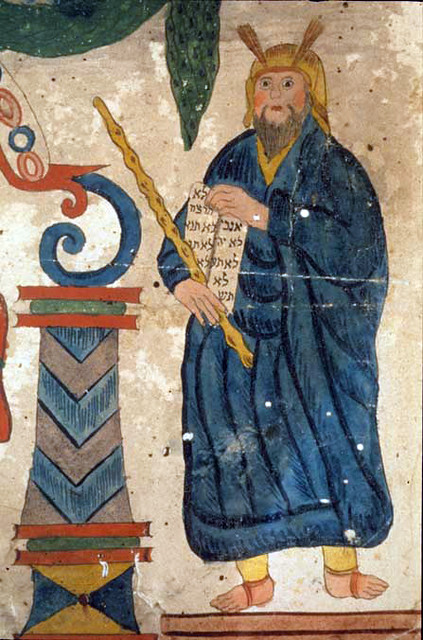
The Staff of Moses has appeared in many works of art over the years. Paintings, sculptures, and stained glass windows often show Moses using the staff to perform miracles. These artworks highlight its link to divine power and its role in biblical stories.
Literature
The Staff of Moses is featured in many religious texts, like the Bible and the Quran, as a tool of God’s power. It has also inspired stories, novels, and poems exploring faith, leadership, and the supernatural. Modern literature often uses its symbolism to represent hope and divine intervention.
The Staff as a Symbol of Hope and Divine Intervention Across Cultures
The Staff of Moses is a strong symbol of hope and divine help. In Judaism, Christianity, and Islam, it represents the belief that with God’s support, any obstacle can be overcome. Its message resonates with people of all faiths and backgrounds.
In many cultures, the staff symbolizes guidance and support during tough times, reflecting the idea that divine power is always there to assist and protect. This lasting symbol of hope continues to inspire people worldwide.
Conclusion
Religious artifacts like the Staff of Moses help us understand both history and faith. They offer a link to the past, showing us the beliefs, practices, and lives of ancient civilizations.
For believers, these artifacts aren’t just historical items—they’re symbols of faith and devotion. They represent stories and miracles central to their traditions, inspiring reverence and strengthening beliefs. Many artifacts also serve as points for worship and pilgrimage, bringing communities together.
The Staff of Moses continues to fascinate both believers and historians. Its role in biblical events and supposed miraculous powers make it a lasting subject of interest. Even with debates over its authenticity, its symbolic meaning remains powerful.
For believers, the staff symbolizes divine intervention and faith, reminding them of Moses’ miracles and a higher power’s guidance and protection. Its enduring appeal reflects its impact on religious stories and its ability to inspire hope and faith across generations.
For historians and archaeologists, the staff offers a glimpse into the blend of history, legend, and faith. The mystery of its origins and authenticity sparks ongoing study and debate, showing the challenges of understanding religious artifacts in a historical context.
The Staff of Moses shows how religious artifacts connect the spiritual and historical. For believers, it strengthens faith and inspires. For historians, it offers a chance to study the cultural and religious importance of ancient artifacts and their lasting influence.
The mystery and appeal of the Staff of Moses highlight how religious artifacts shape our understanding of history and faith. They encourage us to reflect on the stories that shape our beliefs and how those stories still resonate today.
Frequently asked questions about the Staff of Moses
- What is Moses’ staff and why is it significant?
- The staff of Moses is a biblical artifact traditionally believed to have been used by Moses to perform miracles, such as parting the Red Sea and bringing water from a rock. It symbolizes God’s power, divine intervention, and leadership in the narratives of Judaism, Christianity, and Islam. The staff represents faith, authority, and the ability to overcome challenges through divine support.
- Where can I see Moses’ staff today?
- You can see the claimed staff of Moses at two locations:
- Topkapi Palace Museum in Istanbul, Turkey
- Birmingham Museum in Birmingham, England.
- You can see the claimed staff of Moses at two locations:
- How do we know if these artifacts are authentic?
- The authenticity of the claimed staff of Moses artifacts at Topkapi Palace and Birmingham Museum is debated due to the lack of scientific tests and detailed historical documentation. Their origins are primarily based on traditional accounts and religious significance rather than verifiable evidence. Perspectives from historians, archaeologists, and theologians vary, with some expressing skepticism and others valuing the artifacts for their symbolic importance.
- What legends surround Moses’ staff?
- The legends surrounding Moses’ staff include its miraculous abilities, such as turning into a serpent, parting the Red Sea, bringing water from a rock, and performing the plagues of Egypt. These stories are central to the narratives of Moses in the Bible and the Quran, symbolizing divine power, leadership, and faith. The staff is revered as a powerful instrument of God’s will and a symbol of hope across various religious traditions.
- Does Moses’ staff still possess magical properties?
- No evidence suggests that the staff of Moses still possesses magical properties. Its legendary powers are rooted in religious texts and traditions, symbolizing divine intervention and faith rather than inherent magical abilities.
Sources
- Phillips, Graham. The Moses Legacy: In Search of the Origins of God. United Kingdom: Sidgwick & Jackson, 2002.
- Phillips, Graham. n.d. “The Moses Legacy.” Copyright 2005 – Graham Phillips. http://www.grahamphillips.net/moses/moses.html.
- Reeves, John. EXCURSUS ON THE ESCHATOLOGICAL REAPPEARANCE OF THE STAFF OF MOSES. PDF file. Accessed November 24, 2024. https://almuslih.org/wp-content/uploads/Library/Reeves,%20J%20-%20Staff%20of%20Moses.pdf.
- Wikipedia contributors. 2024. “Staff of Moses.” Wikipedia. October 22, 2024. https://en.wikipedia.org/wiki/Staff_of_Moses.
- Wikipedia contributors. 2024. “Sacred Relics (Topkapı Palace).” Wikipedia. October 31, 2024. https://en.wikipedia.org/wiki/Sacred_Relics_%28Topkap%C4%B1_Palace%29.
- Wikipedia contributors. 2024. “Moses in Islam.” Wikipedia. November 19, 2024. https://en.wikipedia.org/wiki/Moses_in_Islam.
- “Where Did Moses Get His Staff & What Happened to It?” n.d. https://www.chabad.org/library/article_cdo/aid/509202/jewish/Where-Did-Moses-Get-His-Staff-What-Happened-to-It.htm.
- “The Staff of Moses – Jewish Theological Seminary.” n.d. Jewish Theological Seminary. https://www.jtsa.edu/torah/the-staff-of-moses/.
- “Moses’ Staff | Texts & Source Sheets From Torah, Talmud and Sefaria’s Library of Jewish Sources.” n.d. https://www.sefaria.org/topics/moses-staff?sort=Relevance&tab=notable-sources.
- Daily Bible Miracles. 2023. “Moses’ Staff – Daily Bible Miracles.” Daily Bible Miracles – Live a Satisfying and Happy Life With Biblical Miracles. November 27, 2023. https://dailybiblemiracles.com/mb3/.
- Secretary, and Secretary. 2022. “The Staff of Moses.” AGUDAS ACHIM אגודת אחים. July 14, 2022. https://agudasachimic.org/2022/07/14/the-staff-of-moses/.
- Jennings, Melody. 2024. “Does the Staff of Moses Still Exist?” Geographic FAQ Hub: Answers to Your Global Questions. June 27, 2024. https://www.ncesc.com/geographic-faq/does-the-staff-of-moses-still-exist/.
- “BBC News | ENGLAND | Staff of Moses ‘found’ in Birmingham.” n.d. http://news.bbc.co.uk/1/hi/england/1924067.stm.
- Ashraf, Syjil. 2017. “This Turkish Museum Allegedly Has the Staff of Moses &Mdash; and You Can Go See It.” The Daily Meal. September 7, 2017. https://www.thedailymeal.com/travel/turkish-museum-allegedly-has-staff-moses-and-you-can-go-see-it/.
- AliAliYaAli. 2023. “Are the Objects Held in Topkapi Palace Authentic?” ShiaChat.Com. https://www.shiachat.com/forum/topic/235003763-are-the-objects-held-in-topkapi-palace-authentic/.
- Taufiq, Danis. 2023. “What Does Moses’ Staff Symbolize? Unveiling the Meaning of the Iconic Biblical Object – Edenbengals.com.” Edenbengals.Com (blog). July 4, 2023. https://edenbengals.com/what-does-moses-staff-symbolize/.
© 2026 Chandra Martin. All Rights Reserved.
All original research, writing, analysis, and historical synthesis on this site is the intellectual property of Chandra Martin. This content may not be copied, reproduced, republished, distributed, adapted, or used in any form—digital or print—without prior written permission from the author.
Limited quotation for academic or educational purposes is permitted only if proper credit is given and the use does not alter the meaning, context, or integrity of the work.
To request permission for use in publications, videos, courses, educational materials, or digital media, please
contact:
Contact
Include:
- Your name
- The specific content you wish to use
- How and where it will be used
- Whether the use is commercial or non-commercial
All requests will be reviewed on a case-by-case basis.
 Chandra Martin