

Elena Milagro de Hoyos was a young Cuban-American woman from Key West, Florida, who became the center of a tragic and bizarre story. After her death from tuberculosis in 1931, Carl von Cosel, an obsessed admirer, secretly preserved her body, keeping it in his home for years, sparking shock and controversy when discovered.
Table of Contents
- Introduction
- Who Was Maria Elena Milagro de Hoyos?
- Who Was Carl von Cosel?
- Their Meeting
- The Tragic Turn
- The Obsession
- The Discovery
- Public Reaction and Legal Consequences
- The Aftermath and von Cosel’s Death
- Conclusion
- FAQs
- Sources
Introduction
Maria Elena Milagro de Hoyos was a young Cuban-American woman who lived in Key West in the early 20th century. She was diagnosed with tuberculosis, a serious illness at the time, and was treated by Carl Tanzler, also known as Carl von Cosel. Cosel, a radiology technician, became infatuated with Maria Elena during her treatment. After her death in 1931, his obsession continued, leading him to take her body from its tomb in 1933 and keep it in his home for seven years until it was discovered by her family.
Who Was Maria Elena Milagro de Hoyos?
Maria Elena Milagro de Hoyos was born on July 31, 1909, in Key West, Florida, to Francisco “Pancho” Hoyos and Aurora Milagro. She had two sisters: Florinda “Nana” Milagro Hoyos, born in 1906, and Celia Milagro Hoyos, born in 1913. The family was of Cuban-American descent, with Francisco and Aurora working as cigar makers.

On February 18, 1926, Elena married Luis Roberto “Louis” Mesa. Shortly after her marriage to Luis, Elena suffered a miscarriage. Their marriage was already strained due to financial difficulties with Luis struggling to find stable employment. Unfortunately, the miscarriage caused the marriage to fall apart. Luis left and moved to Miami, leaving Elena in Key West.
In 1930, Elena was diagnosed with tuberculosis, a disease that had affected her family. Already experiencing financial difficulties, as she struggled to support herself without a stable income, she had the additional burden of dealing with the social stigma associated with tuberculosis, which often led to isolation and discrimination. These challenges likely made her vulnerable and compounded the difficulties she faced during her illness. Despite efforts to treat her, she passed away on October 25, 1931, at the age of 22.
Who Was Carl von Cosel?

Carl von Cosel, born Georg Karl Tänzler on February 8, 1877, in Dresden, Germany, grew up in Germany and later moved to Australia, where he lived for about a decade. His parents were Georg Karl Tänzler and Anna Constantia von Cosel. His father, Georg Karl, was a German engineer and inventor, and his mother, Anna Constantia, was reportedly a descendant of a noble family.
Cosel claimed he had visions of a dead ancestor, Countess Anna Constantia von Cosel, who revealed to him the face of his true love, an exotic dark-haired woman. During World War I, he was interned in a concentration camp for “safe-keeping” due to his German heritage. After the war, he returned to Germany briefly before moving to the United States in 1926.
Cosel began using the name “Count Carl von Cosel” in 1939 when he published an autobiographical account titled “The Trial Bay Organ: A Product of Wit and Ingenuity” in the Rosicrucian Digest. Cosel claimed that the title was inspired by the same dead ancestor who appeared to him in visions during his childhood.
In the U.S., he settled in Zephyrhills, Florida, with his wife Doris Schäfer and their two children. Cosel worked as a radiology technician at the Marine Hospital in Key West, Florida, where he met Elena, the young woman he would become infamously obsessed with.
Their Meeting
In 1930, Elena was diagnosed with tuberculosis. Her health began to rapidly decline. She was admitted to the Marine Hospital in Key West, where von Cosel, a radiology technician, was assigned to her care. Cosel became infatuated with her and visited her frequently, even after his shifts ended.
She received standard tuberculosis treatment for the time, which included bed rest, a nutritious diet, and fresh air. Cosel used various unconventional methods in an attempt to cure her, including bringing X-ray equipment to her family’s home. Cosel created homemade concoctions. While the exact ingredients of these concoctions are not well-documented, it’s known that he used a mix of herbs, oils, and other substances that he believed would help cure her. He also used ultraviolet lamps and electrotherapy equipment. Cosel’s methods were unconventional and not based on medical science, reflecting his desperation and obsession rather than effective treatment.
Cosel openly declared his love for Elena. He showered her with gifts. Cosel’s obsession with Elena was well-known to those around him. Despite his intense obsession and belief that they were destined to be together, there is no record of him proposing marriage to her. Cosel’s feelings for Elena went unreciprocated.
The Tragic Turn
Despite medical treatment, Elena’s condition worsened, and she experienced significant physical suffering. Elena passed away on October 25, 1931, at the age of 22. Her death marked the beginning of von Cosel’s disturbing obsession.

In early 20th-century America, mourning was a significant and highly ritualized practice. The death of a loved one was a common occurrence, and society had well-established customs to cope with grief. Mourning periods were often marked by wearing black clothing, withdrawing from social events, and observing quiet, respectful behavior.
Families would hold elaborate funeral ceremonies, and it was common to have post-mortem photographs taken to remember the deceased. Mourning practices were influenced by cultural and religious traditions, and there was a strong emphasis on maintaining a connection with the deceased through rituals and memorials.
Cosel hired a mortician to embalm Elena’s remains and had an elaborate funeral for her. Cosel paid for all the expenses. He went to great lengths to honor her memory, including having an elaborate mausoleum built for Elena in Key West Cemetery, which he retained the only key to. He paid her family a fee to reside in her room and visit her daily. He even installed a phone in the mausoleum so he could communicate with her family.
For nearly 18 months, von Cosel spent a lot of time visiting her casket, sitting by it, and singing to her corpse. He believed that she was communicating with him from beyond the grave. Cosel claimed that Elena spoke to him in his dreams, expressing her love for him and assuring him that their souls were meant to be together. He believed she was guiding him and encouraging him to continue caring for her, even after her death
The Obsession

In April 1933, under the cover of night, Cosel stole Elena’s body from the cemetery and transported her remains to his home using a toy wagon. After getting the remains to his home, he began the macabre process of maintaining it.
Cosel’s process of preserving Maria Elena Milagro de Hoyos’s remains was both elaborate and ghastly. After exhuming her body, he took several steps to maintain her appearance and prevent decomposition:
- Wiring her limbs: von Cosel used wire to hold her bones together and maintain the structure of her body.
- Replacing her skin: He covered her skin with wax and plaster to give it a lifelike appearance.
- Stuffing her torso: von Cosel filled her torso with rags to maintain its shape and prevent it from collapsing.
- Using perfumes and disinfectants: He applied perfumes, disinfectants, and preserving agents to mask the odor of decomposition and slow down the process.
- Dressing her: von Cosel dressed Maria Elena in fine clothes and applied makeup to her face to make her look as lifelike as possible.
- Maintaining her body: Over the years, von Cosel continued to care for her body, making repairs and adjustments as needed to preserve her appearance.
Cosel’s actions present several ethical and moral dilemmas. His obsession with Elena led him to violate her bodily autonomy and dignity after her death. Exhuming her body without consent and preserving it in his home for seven years raises serious ethical concerns about respect for the deceased and the boundaries of personal obsession.
Cosel’s actions also highlight the issue of consent. Elena could not consent to the treatment of her body after death, and von Cosel’s actions disregarded her family’s wishes and societal norms. This raises questions about the limits of personal desire and the importance of respecting the autonomy and dignity of others, even after death.
Additionally, von Cosel’s behavior can be seen as a manifestation of mental illness, which complicates the ethical evaluation of his actions. While his actions were clearly wrong, understanding his mental state and motivations can provide insight into the complexities of human behavior and the need for compassion and mental health support.
The Discovery
In 1940, rumors of von Cosel’s activities and eccentric behavior began to circulate. When the rumors reached Florinda Milagro Hoyos, Elena’s older sister, she went to von Cosel’s home. He allowed her inside and she saw what was thought to be a life-sized doll of her younger sister. However, upon closer inspection, she realized that it was the preserved body of Elena. Florinda immediately contacted the authorities.
The authorities arrived at von Cosel’s home and discovered Elena’s preserved body. Cosel was immediately arrested and detained. He was psychiatrically examined and found mentally competent to stand trial on the charge of “wantonly and maliciously destroying a grave and removing a body without authorization.”
Once authorities took possession of Elena’s corpse, it was examined by medical professionals to understand the extent of von Cosel’s preservation efforts. The body was found to be encased in wax and plaster, with various other modifications made by von Cosel to maintain its appearance.
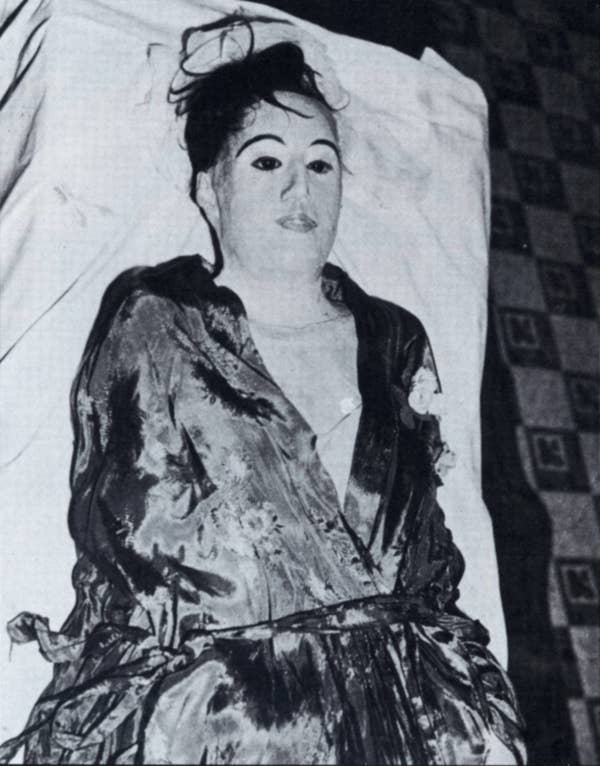
Due to the sensational nature of the case, after the examination, Elena’s body was put on public display for a brief period at Dean-Lopez Funeral Home, attracting thousands of curious onlookers. The public was morbidly fascinated by the bizarre and disturbing details of von Cosel’s actions, which led to over 6,850 people viewing the preserved body. This decision was controversial and raised ethical questions about the treatment of her remains. Eventually, her remains were returned to her family and reburied in an unmarked grave to prevent further disturbances.
Public Reaction and Legal Consequences
The media coverage of von Cosel’s story was extensive and sensationalized due to the nature of his actions. Newspapers and magazines around the world picked up the story, highlighting the shocking details of von Cosel’s obsession with Elena, which was often portrayed as a tragic love story gone terribly wrong.
The community’s response to von Cosel’s actions was a mix of shock, horror, and fascination. Many people were appalled by the gruesome nature of his obsession with Elena and the lengths he went to preserve her body. The story quickly garnered widespread media attention, and von Cosel became a subject of public curiosity and debate.
Some people viewed von Cosel as a tragic figure driven by unrequited love and mental illness, while others saw him as a disturbed individual who committed a deeply unethical act. The case raised ethical questions about the treatment of the deceased and the boundaries of personal obsession.

Cosel faced surprisingly little legal repercussion for his actions. He was charged with grave desecration and removing a body without authorization, but due to the statute of limitations, he was ultimately acquitted. The court found that von Cosel genuinely believed he was acting out of love and that Elena had communicated with him from beyond the grave.
The Aftermath and von Cosel’s Death

After his acquittal, von Cosel lived the remaining years of his life in relative seclusion. Cosel and his legal wife, Doris, were estranged for several years, including the time he was keeping Elena’s corpse in his home. Doris was not aware of his obsession with Elena, the desecration of her grave, nor his “practices” with her corpse.
Cosel died on July 3, 1952, at the age of 75. He was found in his home in Zephyrhills, Florida. It is rumored that his body was found in the arms of an effigy of Elena. He is buried in Oakside Cemetery next to his wife and daughter. His site, once unmarked, is now topped with a simple white cross.
In 1972, Dr. Julio DePoo revealed evidence of necrophilia found during his medical examination of Elena’s remains. Dr. DePoo stated, “I found a tube in Elena’s vagina wide enough to permit sexual intercourse. At the bottom of the tube there was cotton and in an examination of the cotton, I found there was sperm.” DePoo never explained why he kept his autopsy findings secret. It was later speculated that he did not reveal this at the time in order not to cause uproar in an already scandalous plot and to keep things dignified for Elena’s surviving family members.
Conclusion
Carl Tanzler, also known as Carl von Cosel, became deeply infatuated with Maria Elena Milagro de Hoyos, a young woman suffering from tuberculosis. Despite her passing, his obsession only intensified, leading him to secretly exhume her body and live with her preserved remains for several years. This unsettling behavior highlights the extremes of human emotions and the thin line between love and obsession. Cosel’s actions show how powerful feelings can distort reality and morality, revealing a profound struggle with accepting loss and mortality. Their story serves as a cautionary tale about the dangers of unchecked emotions and reminds us of the complexities of love and obsession.
“The fact that the city put her body on display after they found it disgusts me on a whole other level!!!” – u/smurphboard on reddit
Frequently asked questions about Carl von Cosel and Maria Elena Milagro de Hoyos
- Who was Maria Elena Milagro de Hoyos?
- Maria Elena Milagro de Hoyos was a young Cuban-American woman who lived in Key West, Florida. She was born on July 31, 1909, and tragically passed away from tuberculosis on October 25, 1931, at the age of 22. She is best known for being the object of Carl Tanzler’s intense obsession, which led him to exhume her body and live with her remains for several years after her death.
- Who was Carl von Cosel?
- Carl Tanzler, also known as Count Carl von Cosel, was a German-born radiology technologist who worked at the Marine-Hospital Service in Key West, Florida. He became infamously obsessed with Maria Elena Milagro de Hoyos, a young Cuban-American tuberculosis patient. After her death in 1931, Tanzler exhumed her body in 1933 and lived with her preserved remains for seven years until the authorities discovered his actions in 1940.
- How was Carl von Cosel caught?
- Carl von Cosel was caught when Elena’s older sister, Florinda, grew suspicious of the rumors surrounding von Cosel. In 1940, Florinda contacted the authorities after confronting and entering von Consel’s home and finding Elena’s remains.
- Did Carl von Cosel go to prison?
- Cosel was arrested, and although he was not charged with any crime due to the statute of limitations, the case gained widespread attention and notoriety.
- Is it true that Maria Elena Milagro de Hoyos’s body was put on public display?
- Yes, it’s true. After Carl von Cosel’s actions were discovered in 1940, Maria Elena Milagro de Hoyos’s body was put on public display at the Dean-Lopez Funeral Home in Key West. Over 6,850 people came to see her body before it was finally reburied in a secret location by her family to prevent further disturbances.
Sources
- Rosicrucian Digest. United States: Supreme Council of the Rosicrucian Order, 1939.
- Swicegood, Thomas L. P. Von Cosel: A True Story. Baltimore: PublishAmerica, 2004.
- Von Cosel, Carl. The Lost Diary of Count Von Cosel. N.p.: Phantom Press (FL), 2012.
- Harrison, Ben. Undying Love: The True Story of a Passion that Defied Death. United States: New Horizon Press, 1997.
- Master, Omni. 2015. “The American Family and the Processing of Death Prior to the 20th Century.” Omnilogos. December 13, 2015. https://omnilogos.com/american-family-and-processing-of-death-prior-to-20th-century/.
- McIntosh, Matthew. 2024. “A History of Grief and Mourning Across Cultures and Religions.” Brewminate: A Bold Blend of News and Ideas. April 14, 2024. https://brewminate.com/a-history-of-grief-and-mourning-across-cultures-and-religions/.
- Klingener, Nancy. 2018. “A Love That Would Not Die: Key West Tells Its Most Macabre Legend.” WLRN, February 12, 2018. https://www.wlrn.org/culture/2018-02-11/a-love-that-would-not-die-key-west-tells-its-most-macabre-legend.
- Wikipedia contributors. 2024. “Carl Tanzler.” Wikipedia. November 28, 2024. https://en.wikipedia.org/wiki/Carl_Tanzler.
- Ramsland, Katherine. n.d. “A Macabre Love Story — Necrophiles — Crime Library.” https://crimelibrary.org/serial_killers/notorious/necrophiles/story_6.html.
- HistoryHub. n.d. “Twists in a Twisted Tale: The Exploitation, Defilement and Murder of Elena Hoyos.” HistoryHub.Info. https://historyhub.info/twists-in-a-twisted-tale-the-exploitation-defilement-and-murder-of-elena-hoyos/.
- jason garcia. 2015. “Autopsy 6 Secrets of the Dead Hd Full Episode.” https://www.youtube.com/watch?v=vvL4PacNnZo.
- Haunting Crimes. 2023. “The Creepy Obsession of Carl Tanzler: The Man Who Stole a Body for Love!” https://www.youtube.com/watch?v=tmhGQG5eB3Y.
- Johnson, Cara. 2023. “Carl Tanzler, the Man Who Lived With a Corpse for Seven Years.” All That’s Interesting. November 7, 2023. https://allthatsinteresting.com/carl-tanzler.
- “‘STRANGE LOVE’ — American Hauntings.” n.d. American Hauntings. https://www.americanhauntingsink.com/voncosel.
- Furino, Giaco, and Giaco Furino. 2024. “This Mad Scientist Kept His Dead Lover’s Body for Seven Years.” VICE. August 9, 2024. https://www.vice.com/en/article/carl-von-cosel-ronnie-thomas-documentary/.
- “No Place for the Living: The Mad Story of Carl Von Cosel.” n.d. Kickstarter. https://www.kickstarter.com/projects/raygun/no-place-for-the-living-the-mad-story-of-carl-von.
- Hapsis, Emmanuel. 2022. “Meet Carl Von Cosel, the Man Who Slept Next to His Crush’s Corpse for 7 Years.” KQED Pop. August 9, 2022. https://www.kqed.org/pop/106807/meet-carl-von-cosel-the-man-who-slept-next-to-his-crushs-corpse-for-7-years.
- ThisWeekInLibraries. 2024. “The Strange Story of Dr. Carl Van Cosel – This Week in Libraries.” This Week in Libraries. January 25, 2024. https://thisweekinlibraries.com/the-strange-story-of-dr-carl-van-cosel/.
- TrueCrimeTraveler. 2024. “The Curious Case of Carl Tanzler.” True Crime Stories. February 27, 2024. https://truecrimestories.net/the-curious-case-of-carl-tanzler/.
- Dthholland. 2024. “The Tragic and Disturbing Story of Carl Tanzler and Elena De Hoyos.” DannyDutch (blog). October 24, 2024. https://www.dannydutch.com/post/the-tragic-and-disturbing-story-of-carl-tanzler-and-elena-de-hoyos.
- “Carl Tanzler (1877–1952) • FamilySearch.” 2024. FamilySearch. March 14, 2024. https://ancestors.familysearch.org/en/LVQ2-FGW/carl-tanzler-1877-1952.
- “Maria Elena Milagro De Hoyos – the Tombstone Tourist.” 2024. The Tombstone Tourist. November 9, 2024. https://thetombstonetourist.com/graves/maria-elena-milagro-de-hoyos/.
- Guerra, Jessica. 2018. “Morbid Monday: The Macabre Romance of a Man and a Mummy.” Atlas Obscura, January 15, 2018. https://www.atlasobscura.com/articles/morbid-monday-the-macabre-romance-of-a-man-and-a-mummy.
- InsiderRelease. 2024. “Carl Tanzler: The Doctor Who Turned Obsession Into a Macabre Tale.” Insider Release, December 5, 2024. https://insiderrelease.com/carl-tanzler-macabre-obsession/.
- Tiples, Dondi. 2016. “Meet Carl Von Cosel, the Lovestruck Man Who Slept with His Dead Crush for 7 Years.” https://www.elitereaders.com/weird-romance-carl-tanzler-love-obsession-mummy-dream-girl-corpse-bride-elena-de-hoyos/.
- HistoryBuff. 2021. “11 Bizarre Facts About Carl Tanzler- the Man Who Loved a Corpse.” Museum Facts. May 25, 2021. https://museumfacts.co.uk/carl-tanzler-and-elena-de-hoyos/.
- Gryshchenko, Ira. 2020. “In Bed with Death: A Story of a Man Who Lived with the Body of His Loved One for Seven Years.” Bird in Flight. May 8, 2020. https://birdinflight.com/en/world/20200416-carl-tanzler.html.
- Chalakoski, Martin. 2018. “A Disturbed Doctor Fell in Love with His Dying Patient and Lived with Her Corpse for Seven Years.” Thevintagenews. June 10, 2018. https://www.thevintagenews.com/2017/12/06/eccentric-doctor-corpse/.
- Radeska, Tijana. 2017. “The Romantic Eccentric Dr, Fell in Love with a Dying Patient & Lived with Her Corpse.” Thevintagenews. July 26, 2017. https://www.thevintagenews.com/2016/11/19/the-romantic-eccentric-dr-fell-in-love-with-a-dying-patient-lived-with-her-corpse/.
- Kitty, Caledonian. 2020. “True Crime with Caledonian Kitty : The Strange but True Story of Carl Tanzler & His Corpse Bride.” http://www.caledoniankitty.co.uk/2020/06/the-strange-but-true-story-of-carl.html.
- “The Real Corpse Bride – Carl Tanzler’s Horrifying Obsession – History Collection.” 2018. History Collection. https://historycollection.com/the-real-corpse-bride-carl-tanzlers-horrifying-obsession/.“CONFESSIONS OF a FUNERAL DIRECTOR » the Morbid Obsession of Carl Tanzler.” 2014. https://www.calebwilde.com/2014/12/the-morbid-obsession-of-carl-tanzler/.
- Familypedia, Contributors To. n.d. “Maria Elena Milagro De Hoyos (1909-1931).” Familypedia. https://familypedia.fandom.com/wiki/Maria_Elena_Milagro_de_Hoyos_(1909-1931).
- Leer, Miranda, and Miranda Leer. 2023. “Carl Tanzler’s Terrifying, Deadly Obsession.” History Defined – (blog). October 17, 2023. https://www.historydefined.net/carl-tanzler/.
- Barth, Nancy. 2023. “Where Is Carl Tanzler Buried? – the Bridal Tip.” The Bridal Tip (blog). December 29, 2023. https://thebridaltip.com/where-is-carl-tanzler-buried/.
- Find a Grave, database and images (https://www.findagrave.com/memorial/23114033/elena-hoyos: accessed December 20, 2024), memorial page for Elena Hoyos (31 Jul 1909–25 Oct 1931), Find a Grave Memorial ID 23114033, citing Key West Cemetery, Key West, Monroe County, Florida, USA; Maintained by Find a Grave.
- Find a Grave, database and images (https://www.findagrave.com/memorial/10657959/carl-von_cosel: accessed December 20, 2024), memorial page for Dr Carl Von Cosel (8 Feb 1877–23 Jul 1952), Find a Grave Memorial ID 10657959, citing Oakside Cemetery, Zephyrhills, Pasco County, Florida, USA; Maintained by Find a Grave.
© 2026 Chandra Martin. All Rights Reserved.
All original research, writing, analysis, and historical synthesis on this site is the intellectual property of Chandra Martin. This content may not be copied, reproduced, republished, distributed, adapted, or used in any form—digital or print—without prior written permission from the author.
Limited quotation for academic or educational purposes is permitted only if proper credit is given and the use does not alter the meaning, context, or integrity of the work.
To request permission for use in publications, videos, courses, educational materials, or digital media, please
contact:
Contact
Include:
- Your name
- The specific content you wish to use
- How and where it will be used
- Whether the use is commercial or non-commercial
All requests will be reviewed on a case-by-case basis.
 Chandra Martin

.jpg)
