

Deep in the Likouala Swamp of the Congo Basin, stories of Mokele-mbembe have been passed down for generations. Described as a large, long-necked creature, it moves quietly through the water, its reddish-brown skin blending into the surroundings. It feeds on vegetation and avoids people, adding to the mystery. Some believe it’s a surviving dinosaur, while others see it as folklore. Whether real or imagined, the legend persists, leaving the question open—does Mokele-mbembe exist, or is it just a story?
Table of Contents
- Introduction
- Historical Background
- Physical Description
- Habitat and Behavior
- Scientific Investigations
- Cultural Impact
- Conclusion
- FAQs
- Sources
Introduction
Venture into the Congo Basin, where the Likouala Swamp holds a long-standing mystery: the Mokele-mbembe. Often described as a creature with a large body, a long neck, and a strong tail, some believe it could be a living link to the dinosaur era.
For generations, local tribes have shared stories about Mokele-mbembe, while explorers and cryptozoologists have searched for evidence of its existence. Some see it as a legend or a case of mistaken identity, while others think it might reveal something about prehistoric life.
Looking into the story of Mokele-mbembe means exploring both cultural traditions and scientific curiosity. Whether you’re a skeptic or a believer, it raises a simple but powerful question: what else might be out there, hidden from view?
“The quest for Mokele-Mbembe is part of the effort by creationists to overthrow the theory of evolution and teaching of science by any means possible.” – Paleontologist Donald Prothero
Historical Background

The story of Mokele-mbembe has been part of Central African folklore for generations, especially among tribes in the Congo Basin. Its name means “one who stops the flow of rivers” in Lingala and Lingombe, reflecting its supposed presence in local waters. Tribes like the Baka, Bakongo, and Pygmies describe it as a large, long-necked reptile living in the region’s swamps.
Hunters and fishers spoke of brief encounters, recalling its size and presence. It was said to feed on the Malombo plant and other vegetation, using its long neck to reach higher foliage. Though not a predator, Mokele-mbembe was believed to be territorial, using its tail for defense.
Notable Explorers and Researchers
One of the earliest Western accounts came from French missionary Liévin-Bonaventure Proyart in 1776, who described enormous footprints with claw marks in the Congo River region. When Western explorers and missionaries arrived in the early 20th century, they heard these stories firsthand. In 1913, German explorer Ludwig Freiherr von Stein zu Lausnitz documented local descriptions of the creature, bringing the legend to a wider audience. Later, British zoologist Ivan Sanderson and others recorded similar accounts, sparking interest among cryptozoologists.

In the 1980s, Herman Regusters led an expedition to Lake Tele, returning with intriguing findings such as droppings, footprint casts, and sound recordings that did not match any known animal in the Congo Basin. More recently, in 1999, members of the Kabonga tribe claimed to have killed a Mokele-mbembe, further fueling interest and speculation.
Mokele-mbembe has since become a subject of curiosity, with researchers and adventurers searching for evidence. While scientists attribute sightings to folklore or misidentifications, the remote and largely unexplored Congo keeps the mystery alive. For local tribes, the creature remains a cultural symbol, connecting them to their ancestors and the land. Whether real or not, Mokele-mbembe continues to be a fascinating part of the region’s heritage.
Physical Description
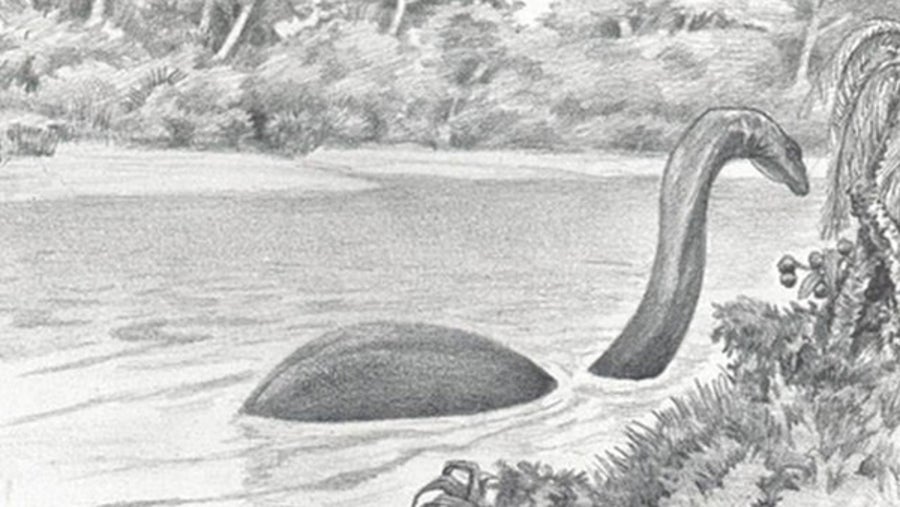
Descriptions of Mokele-mbembe can vary significantly among the local tribes of the Congo Basin. The Baka tribe, for instance, often describes the creature as a large, lumbering beast with a body similar to that of an elephant but with a long neck and tail, akin to a sauropod dinosaur.
The Bakongo tribe, on the other hand, tends to describe Mokele-mbembe with more emphasis on its territorial and elusive nature. They often depict it as a creature that dwells in the deepest, most inaccessible parts of the swamp, avoiding human contact at all costs. The Bakongo also believe that Mokele-mbembe can be aggressive if its territory is encroached upon, using its powerful tail to defend itself.
The Pygmies, who have a profound understanding of the Congo’s intricate ecosystems, add their own nuances to the legend. Their descriptions often focus on the creature’s movements and behaviors, highlighting its ability to navigate the dense swamps with surprising agility and grace. They also speak of Mokele-mbembe’s reddish-brown skin, blending seamlessly with the surrounding environment.
Common among all tribes is that the Mokele-mbembe is an herbivore that eats the Malombo plant and other vegetation in the Congo Basin.
Habitat and Behavior

The Congo River Basin is one of the most diverse ecosystems in the world, covering over 1.3 million square miles. It’s the second-largest river basin after the Amazon and is home to vast rainforests and swamps, making it the setting for stories of Mokele-mbembe.
At the center of the basin is the Congo River, the second largest by water volume, winding through forests, wetlands, and remote communities. The region’s thick vegetation and humid climate create a dense landscape where many species thrive, some still unclassified.
The Likouala Swamp, often mentioned as Mokele-mbembe’s habitat, consists of marshes, slow-moving waters, and interconnected lakes. Its difficult terrain has kept much of it unexplored, allowing stories of hidden creatures to persist.
Speculative Behavior and Feeding Habits
Descriptions of Mokele-mbembe suggest it is a plant-eater, based on accounts from local communities and explorers. It’s said to feed on vegetation in the swamp, particularly the Malombo plant, which grows throughout the Congo Basin. Its long neck would help it reach higher foliage, similar to sauropod dinosaurs.
Mokele-mbembe is often described as reclusive, staying in remote areas and avoiding people. Its reddish-brown skin may help it blend into the environment, which could explain the rarity of sightings.
Though not a predator, it is believed to be territorial. Some accounts describe it using its tail to defend itself if approached. This suggests it may have specific areas within the swamp that it considers its own and reacts aggressively if disturbed.
Indigenous tribes like the Baka, Bakongo, and Pygmies have lived in the basin for generations, passing down knowledge of the land and its wildlife. Their stories, including those of Mokele-mbembe, reflect their deep connection to the environment and the traditions rooted in it.
Scientific Investigations
The search for Mokele-mbembe has led to many expeditions over the past century, each adding to the ongoing mystery.
One of the earliest recorded expeditions was in 1913 when Captain Ludwig Freiherr von Stein zu Lausnitz documented descriptions of the creature from local guides, drawing Western interest.
In the 1930s, British zoologist Ivan Sanderson also heard stories of Mokele-mbembe while traveling in Africa. Though he never saw it himself, his writings kept the discussion alive.
Key Findings
Interest grew in the 1980s. In 1981, Herman Regusters led an expedition to Lake Tele, bringing back footprint casts, sound recordings, and droppings, though nothing conclusive. Around the same time, American explorer Roy Mackal organized trips to the region, gathering local accounts. In 1988, Congolese wildlife official Jose Bourges led a Japanese expedition to the area.

Expeditions have continued in recent years. In 1992, a Japanese film crew claimed to have captured footage of Mokele-mbembe while flying over Lake Tele for a documentary. As they filmed from a small plane, the cameraman noticed something moving in the water, creating a visible wake. He struggled to keep the object in focus but managed to record about 15 seconds of footage. Skeptics suggest the video shows either two men in a canoe or swimming elephants.
Criticism and Skepticism
The story of Mokele-mbembe has faced a lot of criticism from the scientific community. One major issue is the lack of fossil evidence for a large, dinosaur-like creature in the Congo Basin. Extensive paleontological research has found no proof that sauropods or similar animals survived beyond extinction.
Many scientists believe that sightings of Mokele-mbembe are likely misidentified animals, like elephants or hippopotamuses. The Congo Basin’s remote nature makes it easy for these stories to spread. Some even think certain accounts could be hoaxes, created by locals or explorers seeking attention or adventure.
Others see Mokele-mbembe as more of a myth, representing the mysteries of the jungle and the deep connection between local tribes and their land. In this view, the creature is less about being real and more about symbolizing the untamed nature of the region.
Since science relies on solid evidence, most of the expeditions looking for Mokele-mbembe have returned with only anecdotal accounts and inconclusive findings. This hasn’t been enough to convince the scientific community. Despite the fascination with the legend, the lack of hard proof leaves many scientists skeptical.
Still, the mystery of Mokele-mbembe continues to capture people’s imaginations. Whether it’s seen as a myth, a possible living relic, or a symbol of the unknown, the story keeps people curious and sparks debate.
Cultural Impact
The story of Mokele-mbembe plays an important role in local culture and tourism in the Congo Basin. For many indigenous tribes, it’s more than just a legend—it represents a connection to their ancestors and the natural world. Stories about the creature are often shared as lessons, reminding people to respect the rivers and their ecosystems. These tales are passed down through generations, helping preserve traditions and knowledge.
In recent years, the legend has drawn tourists and explorers hoping to uncover the mystery for themselves. The idea of finding a living dinosaur has led to expeditions, documentaries, and books, bringing more attention to the region. This interest has also helped support local economies through eco-tourism and cultural tourism.
At the same time, the increased attention has raised concerns about protecting the environment and the well-being of indigenous communities. Finding a balance between preserving cultural heritage, protecting natural habitats, and benefiting from tourism remains an ongoing challenge.
Popular Media
Mokele-mbembe has made its way into popular media, appearing in books, TV shows, and video games. It’s often portrayed as a dinosaur-like creature living deep in the Congo Basin, reflecting the descriptions shared by local tribes and early explorers.
In books and articles, Mokele-mbembe is a common feature in adventure stories and cryptozoology discussions. Its mysterious nature makes it an interesting subject for both fiction and research.
TV and film have also explored the legend, with documentaries and shows about unexplained creatures frequently covering Mokele-mbembe. These depictions often suggest it could be a surviving dinosaur, adding to the curiosity surrounding it.
The creature has even shown up in video games and other digital media, where players can search for or study it. These appearances keep the story alive and introduce new audiences to the ongoing mystery of Mokele-mbembe.
Balance Between Myth and Science
The story of Mokele-mbembe sits at the crossroads of myth and science. For indigenous communities in the Congo Basin, the creature is more than just a legend—it represents a link to their ancestors and the natural world. These stories, passed down through generations, help preserve cultural history and encourage respect for the environment.
Scientists, however, take a more skeptical approach, looking for solid evidence. Without fossils or confirmed sightings, many researchers see Mokele-mbembe as part of local folklore rather than a real, living creature. Some view it as a symbol of the unknown rather than an actual animal.
Still, the legend continues to draw interest from explorers and researchers who hope to uncover the truth. While no proof has been found, these searches have helped bring attention to the region’s biodiversity and the cultural importance of its stories.
Conclusion
The legend of Mokele-mbembe remains a blend of myth, culture, and curiosity. Said to inhabit the Congo Basin, the creature has been a part of local storytelling for generations, reflecting a deep connection between indigenous communities and their environment.
Despite many searches, no solid evidence has confirmed Mokele-mbembe’s existence, but the mystery continues to spark interest. The line between myth and science encourages exploration and reminds us that there is still much to learn about the world.
Whether Mokele-mbembe is a real creature, a cultural symbol, or simply an intriguing mystery, its story endures. It reflects our ongoing curiosity and desire to explore the unknown.
Frequently asked questions about Mokele-mbembe
- What is Mokele-mbembe?
- Mokele-mbembe is a legendary creature said to inhabit the Congo Basin in Central Africa. Descriptions often resemble a sauropod dinosaur, with a long neck, bulky body, and smooth reddish-brown skin. The creature is primarily known through local folklore and various expeditions seeking to uncover its existence, though no definitive evidence has been found.
- Has anyone ever found Mokele-mbembe?
- No, no one has ever found definitive evidence of Mokele-mbembe’s existence. Despite numerous expeditions and investigations, the creature remains a legend, with no concrete proof to confirm its existence.
- Why is Mokele-mbembe compared to the Loch Ness Monster?
- Mokele-mbembe is often compared to the Loch Ness Monster because both are legendary creatures believed to be surviving dinosaurs or prehistoric animals. Their elusive nature and the remote, mysterious locations they are said to inhabit—Central Africa’s Congo Basin for Mokele-mbembe and Scotland’s Loch Ness for Nessie—make them subjects of fascination, speculation, and numerous expeditions seeking to uncover their existence.
- What do local people believe about Mokele-mbembe?
- Local people in the Congo Basin believe that Mokele-mbembe is a large, elusive creature resembling a dinosaur, inhabiting remote swamps and rivers. They consider it an important part of their cultural heritage, often viewing it as a symbol of the mysteries of the jungle and a connection to their ancestors.
Sources
- Mackal, Roy P. A Living Dinosaur?: In search of Mokele-mbembe. Netherlands: E.J. Brill, 1987.
- Emmer, Rick. Mokele-mbembe: Fact Or Fiction? United States: Facts On File, Incorporated, 2010.
- Gibbons, William J. Mokele-Mbembe: Mystery Beast of the Congo Basin. United States: Coachwhip Publications, 2010.
- Wikipedia contributors. 2025. “Mokele-mbembe.” Wikipedia. February 9, 2025. https://en.wikipedia.org/wiki/Mokele-mbembe.
- Wikipedia contributors. 2024. “Rory Nugent.” Wikipedia. November 13, 2024. https://en.wikipedia.org/wiki/Rory_Nugent.
- Radford, Benjamin. 2013. “Mokele-Mbembe: The Search for a Living Dinosaur.” Livescience.Com. August 13, 2013. https://www.livescience.com/38871-mokele-mbembe.html.
- Tropes, Contributors to Tv. 2024. “Mokele-Mbembe.” TV Tropes. October 28, 2024. https://tvtropes.org/pmwiki/pmwiki.php/Main/MokeleMbembe.
- Beckett, Chris. 2023. “The Mokele-Mbembe: Sightings and Theories.” Fringe Creatures (blog). April 5, 2023. https://fringecreatures.com/the-mokele-mbembe-sightings-and-theories/.
- Admin. 2024. “Mokele-Mbembe – World Mythos.” World Mythos. December 13, 2024. https://worldmythos.com/mokele-mbembe/.
- Bernard, Julius. 2025. “The Legend of the Mokele-Mbembe in Congo.” Cryptidzoo (blog). February 6, 2025. https://www.cryptidzoo.com/post/the-legend-of-the-mokele-mbembe-in-congo.
- Earth, Reticent. 2023. “The Mokele-mbembe.” Reticent Earth. November 26, 2023. https://reticentearth.com/cryptids/the-mokele-mbembe/.
- Lazakhstan. 2024. “Are There Actual Photos of Dinosaur Cryptids?(Even if They Are Lost Media) : R/Cryptozoology.” https://www.reddit.com/r/Cryptozoology/comments/185synv/are_there_actual_photos_of_dinosaur_cryptidseven/.
- Carter-Hayes. 2021. “Why Hasn’t There Been Decent Evidence for Mokele Mbembe? : R/Cryptozoology.” https://www.reddit.com/r/Cryptozoology/comments/ngmr9s/why_hasnt_there_been_decent_evidence_for_mokele/.
- Cheatle, Julian. 2023. “Mokele-mbembe.” Fairy Tales and Myths. December 14, 2023. https://www.fairytalesandmyths.com/mokele-mbembe/.
- The Daily Journalist. 2017. “History of Mokele Mbembe and Expeditions to Africa – Think Research Expose.” Think Research Expose. March 29, 2017. https://thedailyjournalist.com/the-historian/history-of-mokele-mbembe-and-expeditions-to-africa/.
- Brendone Caulfield. 2010. “Mokele-mbembe 92 Footage.” https://www.youtube.com/watch?v=XCMQbxNG_xk.
- Imgur. 2016. “Imgur Cryptid Series #1: Mokele-mbembe – the More You Know Post – Imgur.” Imgur. https://imgur.com/gallery/imgur-cryptid-series-1-mokele-mbembe-Nm9Rd.
© 2026 Chandra Martin. All Rights Reserved.
All original research, writing, analysis, and historical synthesis on this site is the intellectual property of Chandra Martin. This content may not be copied, reproduced, republished, distributed, adapted, or used in any form—digital or print—without prior written permission from the author.
Limited quotation for academic or educational purposes is permitted only if proper credit is given and the use does not alter the meaning, context, or integrity of the work.
To request permission for use in publications, videos, courses, educational materials, or digital media, please
contact:
Contact
Include:
- Your name
- The specific content you wish to use
- How and where it will be used
- Whether the use is commercial or non-commercial
All requests will be reviewed on a case-by-case basis.
 Chandra Martin
