

Norma Merrick Sklarek (1926-2012) was a groundbreaking architect who overcame racial and gender barriers to become the first Black American woman licensed as an architect in New York (1954) and California (1962). She was also the first Black woman to join the American Institute of Architects (AIA). Sklarek’s notable projects include the U.S. Embassy in Tokyo, Terminal One at Los Angeles International Airport, and the Pacific Design Center. She co-founded Siegel-Sklarek-Diamond, the largest woman-owned architecture firm in the U.S. at the time. Her legacy is celebrated for paving the way for future generations of female and minority architects.
Table of Contents
- Introduction
- Early Life and Education
- Breaking Barriers in a Male-Dominated Field
- Key Architectural Contributions
- Marriages and Children
- Death
- A Legacy of Inspiration
- Conclusion
- FAQs
- Sources
”In architecture, I had been the first black woman. I was also the first black woman licensed in both New York and California. But it didn’t mean that I was accepted. You have to believe in yourself… and prove that you are a competent architect.” – Norma Merrick Sklarek
Introduction
Norma Merrick Sklarek was an architect who made a lasting impact on the field. Born in 1926, she broke many barriers as a Black woman in a male-dominated profession. She was the first Black woman to become a licensed architect in New York and California and the first to join the American Institute of Architects.
Sklarek worked on iconic projects like the U.S. Embassy in Tokyo, Terminal One at Los Angeles International Airport, and the Pacific Design Center. Beyond her architectural achievements, she co-founded the largest woman-owned architecture firm in the U.S., opening doors for future female and minority architects.
Her life is a story of toughness and talent. Sklarek didn’t just design buildings; she built opportunities and broke barriers, inspiring others along the way.
Early Life and Education
She was born Norma Evelyn Merrick on April 15, 1926, in Harlem, New York. She was the only child of Dr. Walter Ernest Merrick and Amy (née Willoughby) Merrick, who had immigrated from Trinidad. Her father was a doctor, and her mother was a seamstress. Norma grew up in Crown Heights, Brooklyn, where her father encouraged her to try different activities like fishing, and painting. By 12, she had already learned drafting, showing her early talent in design.
As a child, Sklarek had a strong interest in the arts, especially drawing and painting. Her father, noticing her talent, supported her by giving her drafting tools and materials, which helped her develop technical drawing skills. Norma didn’t just stick to visual arts; she also explored carpentry, gaining hands-on experience in construction and design. These activities sharpened her technical abilities and deepened her love for creating and building.
Norma Merrick Sklarek attended Hunter College High School, an all-girls magnet school in New York City. She excelled academically, particularly in math and science, and showed a strong talent in the visual arts. Her father, recognizing her aptitude, encouraged her to pursue a career in architecture.
She began her higher education at Barnard College in 1944, where she spent a year before transferring to Columbia University’s School of Architecture. During her time at Columbia, Sklarek showed tremendous dedication and passion for architecture, despite the challenges she faced as a minority in a predominantly male field. As one of the few women and the only Black American in her class, she encountered both racial and gender biases. Many of her classmates were World War II veterans or held advanced degrees, which created a competitive environment. Sklarek often had to work alone, commuting to school and completing assignments without the same support network as her peers.
She graduated in 1950 with a Bachelor of Architecture (B.Arch), making her one of the first Black American women with an architecture degree from Columbia University.
Breaking Barriers in a Male-Dominated Field
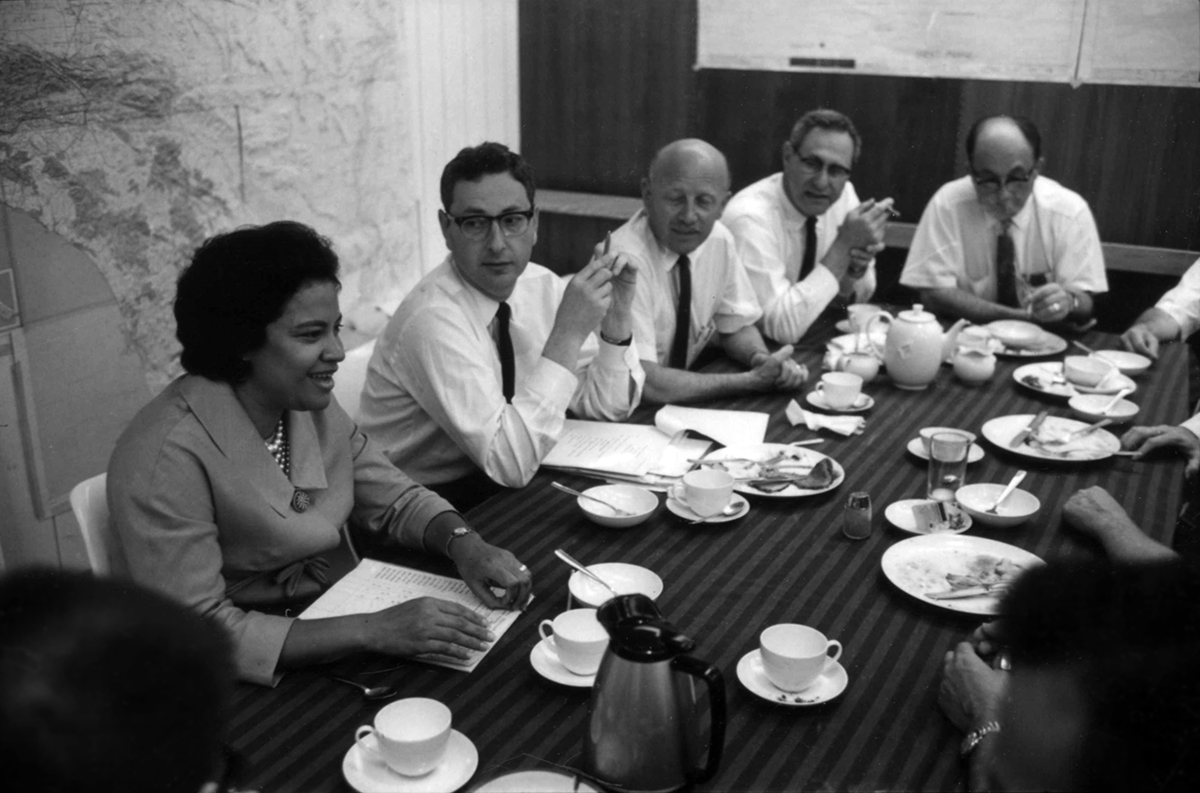
Norma Merrick Sklarek faced major challenges when seeking employment as an architect due to racial and gender biases. Despite graduating from Columbia University with a Bachelor of Architecture in 1950, she was turned down by 19 different firms. Many of these rejections were explicitly based on her identity as a Black woman.
Undeterred, she took a position as a junior draftsperson at the New York City Department of Public Works. Although this role was not her envisioned position, it provided her with valuable experience and helped her build a foundation for her future career.
Her perseverance eventually led her to pass the New York State architect’s licensure exam on her first try in 1954, becoming the first licensed Black American woman architect in New York. This achievement opened doors for her. In 1955, Skidmore, Owings & Merrill (SOM) recognized her talent and offered her a position where she could work on larger-scale projects and further develop her skills. Her employment with SOM was pivotal in establishing her career and reputation in the field of architecture.
Key Architectural Contributions
After five years with SOM, Sklarek moved to Los Angeles to join Gruen Associates, where she continued to thrive and work on prominent projects. Her career at Gruen Associates lasted for 20 years, from 1960 to 1980. Sklarek passed the California licensing exam on her first attempt in 1962, becoming the first Black American woman to be licensed as an architect in California. Some of her most notable projects with Gruen Assoicates were:

Fox Plaza, San Francisco: Completed in 1966. As the director of architecture at Gruen Associates, Sklarek was responsible for overseeing the technical aspects of the project, ensuring that it met the necessary standards and requirements.
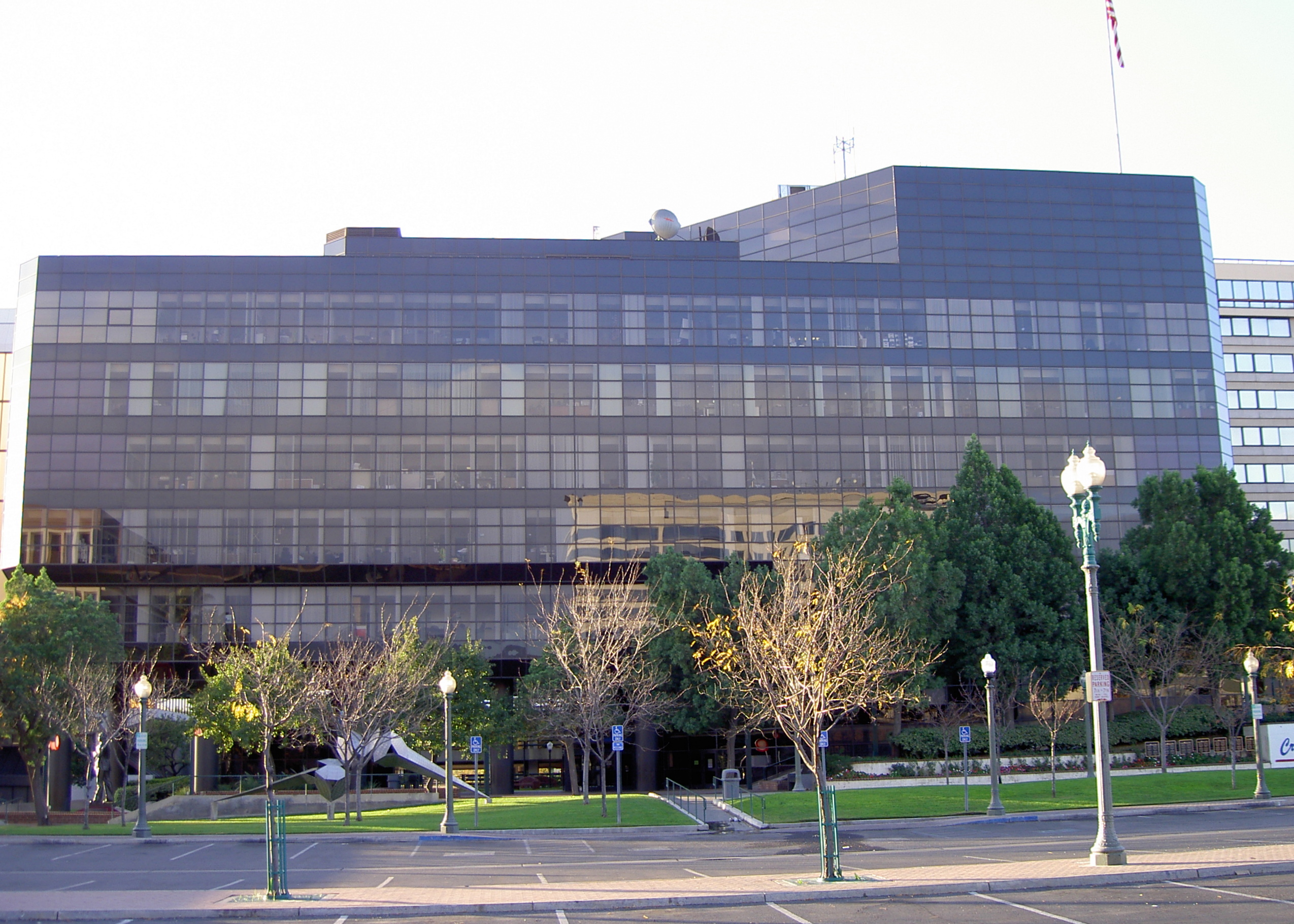
San Bernardino City Hall: Completed between 1972-73, Sklarek collaborated with renowned architect, Cesar Pelli, and was responsible for overseeing the technical aspects of the project, ensuring that it met the necessary standards and requirements. It is known for its modernist design and functionality.

U.S. Embassy in Tokyo, Japan: Completed in 1976, Sklarek collaborated with Cesar Pelli on this project. She was responsible for overseeing the technical aspects of the design and ensuring that the project met the necessary standards and requirements.

Pacific Design Center, Los Angeles: Completed in 1978 with Cesar Pelli, Sklarek was responsible for overseeing the technical aspects of the project, ensuring that it met the necessary standards and requirements. This iconic project is known for its striking blue whale sculpture and lighted stairwell, making it a landmark in West Hollywood.

After leaving Gruen Associates in 1980, Norma Merrick Sklarek joined Welton Becket Associates as a vice president and project director. She worked there until 1985, continuing to make significant contributions to the field of architecture. Her most notable contribution being Terminal One at Los Angeles International Airport.
She was hired by Welton Becket Associates for this $50-million project, which was timed to accommodate the influx of tourists expected for the 1984 Summer Olympics. Her leadership and expertise were instrumental in ensuring the project stayed on schedule and met all necessary standards. Despite initial skepticism from her colleagues about a woman leading such a large project, Sklarek’s determination and skill won them over. The project was completed in January 1984.
Marriages and Children
In 1947, Sklarek married Dumas Flagg Ransom. He was a law student at Wagner College in Long Island, New York. Together, they had one son, Gregory Merrick Ransom. The union ended in divorce after a few years. She married again in 1950 to Benjamin Fairweather. Sklarek and Fairweather had one son, David Merrick Fairweather.
In 1967, she married Rolf Sklarek, a Bauhaus graduate and architect. They met while working together at Gruen Associates. Nearly 20 years her senior, Rolf was born on August 17, 1906 in Charlottenburg, Berlin, Germany. Their marriage ended in divorce in the late 1970s. Norma and Rolf did not have any children together. Rolf died on February 29, 1984 at the age of 77 in Los Angeles, California.
Dr. Cornelius Welch was her fourth husband. They married in 1985 and remained together until her death in 2012. She was stepmother to Dr. Welch’s daughter, Susan, from a previous marriage.
Death
Norma Merrick Sklarek died of heart failure, complicated by a stroke, at her home in Pacific Palisades, California, on February 6, 2012. She was cremated after her death, and her ashes were given to her family.
A Legacy of Inspiration
Norma Merrick Sklarek was committed to nurturing the next generation of architects, especially women and minorities. She mentored countless young architects, offering guidance, support, and encouragement. Her mentorship helped many aspiring architects navigate the challenges of the profession and achieve their goals.
She was actively involved in organizations that promoted diversity and inclusion in architecture. She played a key role in the National Organization of Minority Architects (NOMA), which was founded in 1971 to champion the causes of minority architects. Sklarek’s involvement in NOMA and other professional organizations helped create a more inclusive and supportive environment for underrepresented groups in architecture.
Siegel-Sklarek-Diamond (SSD)
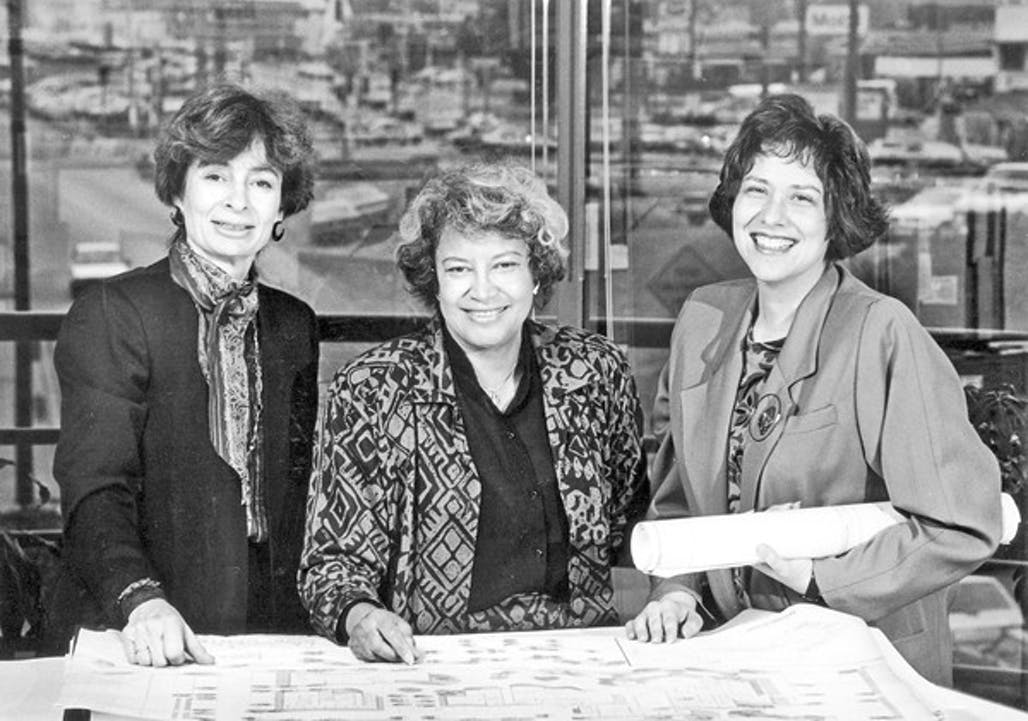
In 1985, she co-founded Siegel-Sklarek-Diamond (SSD) with Margot Siegel, and Katherine Diamond. The firm was one of the largest woman-owned architectural firms in the United States at the time and the first to be co-owned by a Black American woman.
The trio combined their unique skill sets to build a successful practice. Margot Siegel took on the task of quality review and preparing working drawings; Norma Merrick Sklarek brought her impressive project management abilities and keen architectural sense; and Katherine Diamond took charge of the design, giving shape to simple ideas and ensuring clients’ needs were met.
SSD turned the industry standard on its head and paved the way for many more influential women to follow. Their work covered a broad breadth and depth of categories, including educational facilities, community buildings, and commercial and industrial projects. It eventually dissolved after Sklarek’s retirement in 1992.
Awards and Honors
Sklarek received numerous awards and honors throughout her career, including being named a Fellow of the American Institute of Architects (AIA) in 1980, the first Black American woman to receive this distinction. Additional notable honors are:
- Association of Black Women Entrepreneurs’ Outstanding Business Role Model Award: She received this award in 1987 for her exceptional contributions to the field.
- Honored by the National Organization of Minority Architects (NOMA): Sklarek was recognized by NOMA for her advocacy and mentorship efforts.
- Honored by the Black Women in Sisterhood for Action: She received recognition from this organization for her trailblazing career.
- Honorary Member of Delta Sigma Theta sorority: In 1998, Sklarek was honored as an honorary member of this sorority.
- Resolution from California State Legislature: In 2007, the California State Legislature honored Sklarek for her contributions to architecture.
- AIA Whitney M. Young Jr. Award: In 2008, Sklarek received this prestigious award for her service and social action in the field of architecture.
- Norma Merrick Sklarek Architectural Scholarship Award: Established at Howard University to support aspiring architects, this scholarship honors Sklarek’s legacy.
After Retirement
Following her retirement, Sklarek continued to contribute to the field of architecture by serving on the California Architects Board and chairing the American Institute of Architects’ National Ethics Council.
Sklarek frequently spoke at conferences, seminars, and universities, sharing her experiences and insights. Her talks not only highlighted the importance of diversity in architecture but also inspired and empowered audiences to pursue their passions and overcome obstacles.
Through her leadership roles and achievements, Sklarek provided much-needed representation for women and minorities in architecture. Her presence in the field challenged stereotypes and helped reshape perceptions about who could be an architect.
Conclusion
Norma Merrick Sklarek was an innovative architect who broke down barriers and opened doors for future generations. As the first Black woman licensed as an architect in New York and California, she overcame racial and gender obstacles with determination. Her work on major projects like the U.S. Embassy in Tokyo and Terminal 1 at Los Angeles International Airport showed her talent and vision.
Beyond her work, Sklarek was a mentor and advocate for diversity, inspiring many young architects, especially women and minorities. She co-founded Siegel-Sklarek-Diamond, the largest woman-owned architecture firm in the U.S. at the time, creating opportunities for underrepresented groups.
Her numerous awards, including being named a Fellow of the American Institute of Architects and receiving the AIA Whitney M. Young Jr. Award, highlight her impact on the field. Sklarek’s legacy continues to inspire, showing that perseverance and talent can lead to lasting change.
Norma Merrick Sklarek’s life reminds us that courage and determination can break barriers and help build a more inclusive world.
Frequently asked questions about Norma Merrick Sklarek
- Who was Norma Merrick Sklarek?
- Norma Merrick Sklarek was an influential American architect, known for being the first Black American woman to become a licensed architect in both New York (1954) and California (1962). She worked on notable projects such as the U.S. Embassy in Tokyo and Terminal One at Los Angeles International Airport. Sklarek was also a dedicated mentor and advocate for diversity in architecture, co-founding the largest woman-owned architectural firm in the U.S. at the time, Siegel-Sklarek-Diamond.
- What challenges did she face?
- Norma Merrick Sklarek faced significant challenges due to her race and gender. Despite graduating from Columbia University with a degree in architecture, she struggled to find employment because many firms outright rejected her applications, citing her identity as a black woman. She also encountered systemic barriers and entrenched professional obstacles that minorities and women faced in the mid-20th century. Despite these challenges, Sklarek persevered, eventually making groundbreaking contributions to the field of architecture.
- What were some of her most notable projects?
- Some of Norma Merrick Sklarek’s most notable projects include the U.S. Embassy in Tokyo, Japan (1976), Terminal One at Los Angeles International Airport (1984), Pacific Design Center in Los Angeles (1978), Fox Plaza in San Francisco (1966), San Bernardino City Hall in California (1972-73), Queens Fashion Mall in New York (1992), and the Wilshire La Brea Metro Rail station in Los Angeles. These projects highlight her exceptional talent and contributions to the field of architecture.
- Why is her legacy important?
- Norma Merrick Sklarek’s legacy is important because she broke racial and gender barriers in architecture, became a role model for women and minorities, and advocated for diversity and inclusion in the field. Her accomplishments and mentorship inspired countless individuals, paving the way for a more inclusive and diverse profession.
Sources
- Black Women in America: An Historical Encyclopedia. United States: Carlson Pub., 1993. (Internet Archive)
- I Dream a World: Portraits of Black Women who Changed America. United States: Stewart, Tabori & Chang, 1989. (Internet Archive)
- Smith, Jessie Carney. Notable Black American Women. United States: Gale Research, 1992. (Internet Archive)
- “At The Forefront of Design | Hunter College High School Alumnae/I Association.” 2021. https://hchsaa.org/at-the-forefront-of-design/.
- Wikipedia contributors. 2024. “Norma Merrick Sklarek.” Wikipedia. September 19, 2024. https://en.wikipedia.org/wiki/Norma_Merrick_Sklarek.
- “Pioneering Women of American Architecture.” n.d. https://pioneeringwomen.bwaf.org/norma-merrick-sklarek/.
- Bempong, and Bempong. 2024. “The Rosa Parks of Architecture: Norma Merrick Sklarek – African American Design Nexus.” African American Design Nexus – Honoring the Work of African American Designers at the Intersection of Design, Black Identity, and Practice. (blog). February 23, 2024. https://aadn.gsd.harvard.edu/2024/02/23/the-rosa-parks-of-architecture-norma-merrick-sklarek/.
- “Norma Merrick Sklarek Archival Collection | NMAAHC.A2018.23 | SOVA, Smithsonian Institution.” n.d. https://sova.si.edu/record/nmaahc.a2018.23.
- Tedpahogo, J.Anthony. 2024. “Norma Merrick Sklarek—Architect and Trailblazer.” Manson Construction (blog). January 15, 2024. https://www.mansonconstruction.com/post/norma-merrick-sklarek-architect-and-trailblazer.
- Nancy. 2021. “An Inside Look at Siegel Sklarek Diamond – Optima.” Optima. March 29, 2021. https://www.optima.inc/an-inside-look-at-siegel-sklarek-diamond/.
- “Sklarek | Profile | AIA & Diversity | AIA & Whitney Young.” n.d. AIA & Whitney Young. https://www.50yearsafterwhitneyyoung.org/aia-profile-norma-merrick-sklarek.
- Admin. n.d. “Norma Merrick Sklarek | Civic Memory Working Group.” https://civicmemory.la/report/norma-merrick-sklarek/.
- Architectuul. “Fox Plaza.” Accessed January 11, 2025. https://architectuul.com/architecture/fox-plaza.
- Architectuul. “Embassy of the US in Tokyo.” Accessed January 11, 2025. https://architectuul.com/architecture/embassy-of-the-us-in-tokyo.
- “Job 930: Rolf Sklarek, Sklarek House (Los Angeles, Calif.), 1951 | DPLA.” n.d. https://dp.la/item/57e1b52f2e3be90a324187c765252998.
- “DOCOMOMO Prepares for Coming Decade as 1970s Architecture Turns 50.” n.d. Archinect. https://archinect.com/news/article/150213754/docomomo-prepares-for-coming-decade-as-1970s-architecture-turns-50.
- Craven, Jackie. 2019. “Biography of Architect Norma Sklarek.” ThoughtCo. July 3, 2019. https://www.thoughtco.com/norma-merrick-sklarek-faia-177422.
- Skidmore, Owings & Merrill. 2021. “Honoring Norma Merrick Sklarek, Architect Who Broke Race and Gender Barriers – SOM.” SOM. September 7, 2021. https://www.som.com/news/honoring-norma-merrick-sklarek-architect-who-broke-race-and-gender-barriers/.
- Amlani, Muskaan. 2024. “Norma Merrick Sklarek: Breaking Barriers in Architecture.” RTF | Rethinking the Future. October 3, 2024. https://www.re-thinkingthefuture.com/know-your-architects/a13179-norma-merrick-sklarek-breaking-barriers-in-architecture/.
- “How Norma Merrick Sklarek Paved the Way for Black Women Architects.” n.d. Columbia Magazine. https://magazine.columbia.edu/article/how-norma-merrick-sklarek-paved-way-black-women-architects.
- Llc, Build. n.d. “Norma Merrick Sklarek: A Gentle and Indomitable Force | BUILD Blog.” https://web.archive.org/web/20200804053804/https://blog.buildllc.com/2020/06/norma-merrick-sklarek-a-gentle-and-indomitable-force/.
- “Norma (Merrick) Sklarek (1926-2012) | WikiTree FREE Family Tree.” 1926. April 15, 1926. https://www.wikitree.com/wiki/Merrick-3539.
- “Rolf Sklarek.” 2011. AncientFaces. November 11, 2011. https://www.ancientfaces.com/person/rolf-sklarek-birth-1906-death-1984/85154263.
- “Sklarek, Rolf (American Architect, 1906-1984) – Social Networks and Archival Context.” n.d. https://snaccooperative.org/view/48002429#resources.
- “Rolf Bruno Sklarek (1906–1984).” 2024. FamilySearch. November 8, 2024. https://ancestors.familysearch.org/en/L2QL-W3D/rolf-bruno-sklarek-1906-1984.
- “Smithsonian Institution · Groundbreaking Architect Norma Sklarek.” n.d. https://guides.apple.com/?pg=10903883617802205365&lsp=9902&name=groundbreaking-architect-norma-sklarek.
- Dillon, Nancy. 2019. “Pioneering Harlem Native Norma Merrick Sklarek Dies.” New York Daily News, January 10, 2019. https://www.nydailynews.com/2012/02/10/pioneering-harlem-native-norma-merrick-sklarek-dies/.
- Contributor, Aj. 2021. “Norma Merrick Sklarek Dies.” The Architects’ Journal. August 13, 2021. https://www.architectsjournal.co.uk/news/norma-merrick-sklarek-dies.
- Find a Grave, database and images (https://www.findagrave.com/memorial/257114847/norma-sklarek: accessed January 11, 2025), memorial page for Norma Merrick Sklarek (15 Apr 1926–6 Feb 2012), Find a Grave Memorial ID 257114847; Cremated; Maintained by J. Wilson (contributor 51320283).
© 2026 Chandra Martin. All Rights Reserved.
All original research, writing, analysis, and historical synthesis on this site is the intellectual property of Chandra Martin. This content may not be copied, reproduced, republished, distributed, adapted, or used in any form—digital or print—without prior written permission from the author.
Limited quotation for academic or educational purposes is permitted only if proper credit is given and the use does not alter the meaning, context, or integrity of the work.
To request permission for use in publications, videos, courses, educational materials, or digital media, please
contact:
Contact
Include:
- Your name
- The specific content you wish to use
- How and where it will be used
- Whether the use is commercial or non-commercial
All requests will be reviewed on a case-by-case basis.
 Chandra Martin