

The Middle Passage was a brutal part of the transatlantic slave trade, where millions of enslaved Africans were forcibly shipped to the Americas. Key points include:
Overview
The Middle Passage was the second part of the triangular trade, which included:
- European goods (like guns and cloth) sent to Africa.
- Enslaved Africans transported to the Americas.
- American goods (like sugar and tobacco) sent to Europe.
Conditions on the Ships
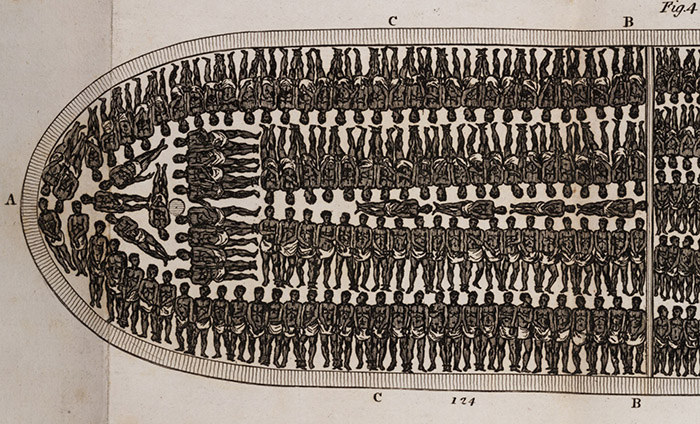
Enslaved Africans were packed tightly into ship holds in terrible conditions. Chained together, they barely had room to move or breathe. Each person had about 6 feet of space in length, 16 inches in width, and 3 feet in height. These cramped spaces led to the spread of diseases and caused many enslaved to not survive the journey.
Physical Abuse and Brutality
Enslaved Africans faced brutal treatment from the ship’s crew. The crew used harsh punishments to keep control and prevent revolts.
Beatings and Whippings
The ship’s crew often beat and whipped enslaved Africans to keep control and stop resistance. These punishments were given for small offenses or to create fear.
Shackling and Restraints
Enslaved people were chained in pairs or groups, making it hard to move and causing pain. The iron chains often caused wounds and infections from constant wear and poor hygiene.
Sexual Violence
Enslaved women and girls were especially vulnerable to sexual violence from the crew, often facing rape and other abuse, adding to their trauma. There are also accounts of male enslaved people facing sexual violence. The harsh conditions on the ships made all enslaved people, no matter their gender, vulnerable to abuse.
Forced Labor
Despite the harsh conditions, enslaved Africans were sometimes forced to work on the ship, like cleaning the decks or helping with navigation, which added to their exhaustion and suffering.
Psychological Trauma
Enslaved Africans suffered deeply, being forcibly torn from their families and communities, never to see their loved ones again. They endured physical abuse, sexual violence, and the constant fear of death, and the unknown created psychological stress.
Malnutrition and Disease
Conditions on the ships were filthy, with little food or water. The food was usually boiled rice, millet, cornmeal, or stewed yams, and they got one meal a day. Water was limited. If bad weather or delays extended the journey, the small rations were cut even more.
The dirty conditions on the ships spread diseases like dysentery, smallpox, and measles. Sick enslaved Africans were often ignored and left to die, showing the cruel treatment they faced.
Mortality Rates
Disease, malnutrition, violence, and overall brutal conditions on the ships led to death rates during the Middle Passage being very high, with around 18-20% of enslaved Africans not surviving the journey. It’s estimated that up to two million enslaved died on these voyages.
Resistance and Revolts
Despite the brutal conditions, enslaved Africans often tried to resist and revolt. They were chained to prevent uprisings, but many rebellions still occurred.
Here are some key rebellions during the Middle Passage:
- The Amistad Rebellion (1839): Enslaved Africans on the Spanish ship La Amistad, led by Sengbe Pieh (Joseph Cinqué), took control of the ship. They were captured by the U.S. Navy, but the U.S. Supreme Court eventually set them free.
- The Creole Rebellion (1841): Enslaved Africans on the American ship Creole revolted and took control. They sailed to the British-controlled Bahamas, where slavery was banned, and were granted asylum and freedom.
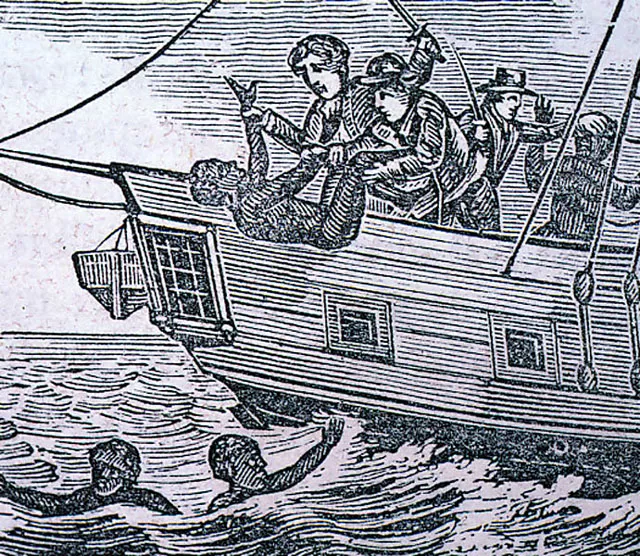
- The Zong Massacre (1781): While not a rebellion, the Zong massacre was a tragic event. The crew of the British slave ship Zong threw 132 enslaved Africans overboard to claim insurance for “lost cargo,” exposing the cruelty of the slave trade.
Legacy
The Middle Passage deeply shaped the Americas’ demographics, culture, and economies. It created racial and social hierarchies and influenced the African diaspora’s cultural heritage. This brutal part of the transatlantic slave trade left lasting effects on those who endured it and their descendants.
Sources
- Mustakeem, Sowande M. Slavery at Sea: Terror, Sex, and Sickness in the Middle Passage. United States: University of Illinois Press, 2016.
- Boomer, Lee. 2024. “The Middle Passage – Women &Amp; the American Story.” Women & the American Story. February 16, 2024. https://wams.nyhistory.org/early-encounters/spanish-colonies/the-middle-passage/.
- The Editors of Encyclopaedia Britannica. 2024. “Middle Passage | Definition, Conditions, Significance, & Facts.” Encyclopedia Britannica. November 18, 2024. https://www.britannica.com/topic/Middle-Passage-slave-trade.
- Wikipedia contributors. 2024. “Middle Passage.” Wikipedia. November 28, 2024. https://en.wikipedia.org/wiki/Middle_Passage.
- American History Central. 2024. “Middle Passage, Summary, Facts, Significance, APUSH, Ports.” February 5, 2024. https://www.americanhistorycentral.com/entries/middle-passage/.
- “File-uploads/Sites/27408/Audio/84ee076-b2f4-6ed3-03d0-cb6d08f312ea_Recording.mp3.” n.d. https://www.studentsofhistory.com/middle-passage.
© 2026 Chandra Martin. All Rights Reserved.
All original research, writing, analysis, and historical synthesis on this site is the intellectual property of Chandra Martin. This content may not be copied, reproduced, republished, distributed, adapted, or used in any form—digital or print—without prior written permission from the author.
Limited quotation for academic or educational purposes is permitted only if proper credit is given and the use does not alter the meaning, context, or integrity of the work.
To request permission for use in publications, videos, courses, educational materials, or digital media, please
contact:
Contact
Include:
- Your name
- The specific content you wish to use
- How and where it will be used
- Whether the use is commercial or non-commercial
All requests will be reviewed on a case-by-case basis.
 Chandra Martin