The Wendigo is a chilling entity from Algonquian lore, often portrayed as a malevolent spirit with a taste for human flesh. Stemming from the traditions of Native American tribes such as the Algonquin, Cree, and Ojibwe, the Wendigo represents humanity’s darker aspects. Typically depicted as thin and skeletal, it’s driven by a relentless craving for human meat. The myth holds that those who succumb to cannibalism, particularly during famine, may become Wendigos themselves. This fearsome being is a symbol of the perils of unbridled avarice and the terror of losing one’s human essence. Its eerie existence imparts a stern moral warning on the perils of extreme need and the limits of human conduct.
The legend is commonly associated with the severe winters and solitary environments encountered by Native American tribes. Its role in folklore highlights the dread of hunger and the mental strain caused by seclusion. This tale emphasizes the deep connection between Native American societies and the environment, acting as a cautionary tale about the need for harmony and reverence for the boundaries set by nature.
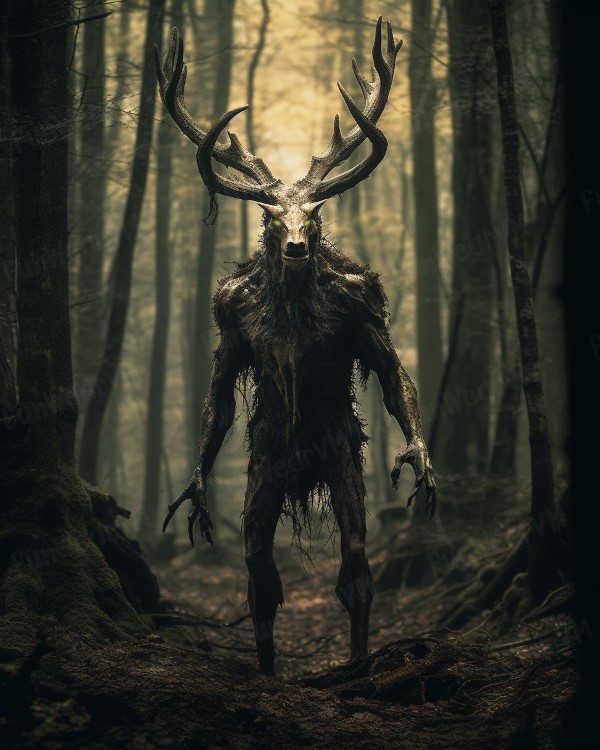
The Wendigo is often depicted with glowing eyes, yellow fangs, and elongated claws, highlighting its fearsome presence. Its gaunt figure is marked by skin pulled taut over its skeletal frame, lending it an ethereal, almost see-through appearance. The creature’s voice is chilling and otherworldly, known for drawing in unwary prey with its haunting call.
The Wendigo tales, steeped in oral tradition, have been handed down from elders to the youth, enduring as a vital element of Native American cultural legacy. They mirror the values and apprehensions of the communities that have sustained them through generations. A few of the tales are:
- The Hunter’s Tale: The story recounts a hunter who, lost in the woods during a brutal winter, succumbed to hunger and consumed his companion, becoming a Wendigo. When villagers discovered him later, he was emaciated and had an unending craving for human flesh. The narrative serves as a grim reminder of the severe repercussions of cannibalism and the forfeiture of one’s humanity.
- The Wendigo and the Warrior: The tale recounts the adventure of a courageous warrior who faced a Wendigo during a hunt. Aware of the peril, the warrior engaged in a fierce battle and emerged victorious, though it was a hard-won fight. The narrative highlights the value of courage and alertness when confronting malevolent forces.
- The Shaman’s Warning: In the story, a shaman cautions his tribe about the Wendigo spirit, advising them to unite and pool their resources to stave off despair and starvation. Thanks to the shaman’s guidance, the tribe endures a harsh winter, escaping the clutches of the Wendigo’s curse.
In Algonquian folklore, the Wendigo is infamous for its endless hunger, a trait that highlights its horror. Always starving, it’s driven by a relentless desire for human flesh. Legend has it that cannibalism, often as a result of severe famine, can turn a person into a Wendigo. As the transformation grips them, they grow thin and bony, their skin pulling taut across their frame. Their eyes take on a ghostly glow, while their teeth sharpen into yellowed points. Their hunger for human flesh intensifies, propelling them to stalk and devour more prey. This ghastly metamorphosis is permanent, dooming the person to an endless existence of voracious hunger and wickedness.
The Wendigo myth embodies the breakdown of moral codes and ethical limits. It shows how a person, once guided by kindness and social bonds, can devolve into a being driven solely by raw instinct and craving. This shift into a Wendigo is the epitome of losing one’s human essence. The affected individual sheds their sense of self, compassion, and social ties, turning into an emblem of rampant greed and base impulses. The onset of Wendigo possession is often linked to severe isolation and lack of resources, underscoring the mental and emotional strain such conditions can inflict. It warns of the peril in surrendering our humanity when pushed to the brink.
In modern contexts, the term Wendigo psychosis is used to describe a rare and controversial condition where individuals experience intense cravings for human flesh. This condition is believed to be linked to cultural and environmental factors, particularly among those living in the northern forests of North America. The condition is thought to be influenced by the legends and beliefs surrounding the Wendigo in Algonquian folklore. Harsh living conditions, such as extreme cold and isolation, may contribute to the development of this condition. Symptoms can include delusions, anxiety, depression, and violent behavior.
The Wendigo has left a lasting mark on modern horror and mythology, weaving its way into various aspects of popular culture. In literature, it haunts the pages of Stephen King’s “Pet Sematary,” intensifying the eerie themes of death and revival. On the screen, the Wendigo terrorizes viewers in the hit TV show “Supernatural,” with an entire episode dedicated to its frightful legend. The indie movie “The Vast of Night” creatively fuses the Wendigo myth with UFO tales, crafting a distinct horror narrative. In the realm of gaming, the Wendigo lurks in the interactive horror adventure “Until Dawn,” heightening the game’s tension and fear factor.
The Wendigo myth has found its place in social commentary, especially as a symbol for environmental concerns. Its ties to winter and scarcity reflect the broader issues of environmental degradation and the fallout of human excess. Yet, the use of the Wendigo by non-Indigenous people has raised issues of cultural misappropriation, underscoring the importance of honoring Indigenous narratives.
Frequently asked questions about the Wendigo
- What is the Wendigo?
- The Wendigo, an entity from Algonquian lore, is often portrayed as a malevolent spirit with an appetite for human flesh. This emaciated, skeletal creature is marked by its glowing eyes, decayed teeth, and razor-sharp claws, symbolizing an unending hunger and deep-seated fear. Legend has it that those who succumb to cannibalism, driven by dire starvation, may turn into a Wendigo—a change that’s permanent, dooming them to forever hunger for human meat.
- What causes Wendigo psychosis?
- Wendigo psychosis is a rare and controversial condition believed to cause individuals to experience intense cravings for human flesh. Experts suggest that it arises from a combination of cultural narratives, psychological vulnerabilities, and environmental stressors. The cultural beliefs and taboos surrounding cannibalism in Algonquian folklore play a significant role, shaping an individual’s perception of such behaviors and the associated fears. Environmental factors, such as extreme cold and isolation, can also contribute to the development of this condition.
- What moral lessons does the Wendigo convey?
- The Wendigo is a powerful figure in Algonquian folklore, teaching us crucial moral lessons. It represents the perils of greed, with its endless hunger and rampant consumption serving as a stark warning against the perils of selfishness. It’s also a grim reminder of the consequences of cannibalism, representing the deep moral and spiritual decline that can ensue, particularly in dire situations. The transformation into a Wendigo is a metaphor for losing one’s humanity and compassion, underscoring the need to hold onto our moral values and empathy, even when times are tough. Moreover, the Wendigo reflects the mental and emotional strain caused by loneliness and deprivation, highlighting the importance of community and mutual support to get through tough times.
- Is the Wendigo still relevant today?
- Indeed, the Wendigo continues to be a significant symbol in culture and psychology. It warns us about the perils of greed and inhumanity, themes that are still pertinent today. The Wendigo also pops up in modern horror and myth, featuring in books, movies, and games. Plus, Wendigo psychosis sheds light on how cultural narratives and mental health intersect, providing a window into the influence of myths on behavior and societal norms.
The Wendigo, an entity from Algonquian lore, and more than just a scary story, is depicted as an evil, flesh-eating spirit with a starved, bony look and an unending craving for human meat. The creature is a deep reflection on human fears and ethical teachings. They capture universal themes of greed, solitude, and what it means to lose our humanity. These stories serve as warnings about the perils of uncontrolled desires and the critical need to uphold moral standards, even when times are tough. Understanding these tales gives us a glimpse into the values and anxieties of the societies that birthed them, reminding us of the eternal human conflict between survival and ethics. They shed light on the shadowy sides of human nature and emphasize the importance of compassion, community, and moral fortitude in facing life’s trials. So, when you explore folklore, see these narratives as insights into the human spirit, offering enduring lessons that echo through time. Don’t you think?
“What I have been told and what I’ve read from others is that the creature — or spirit in some cases — is not, like, a generic horror movie monster like a vampire or a werewolf or something. It is actually a rather important part of the folklore and mythology of Algonquian-speaking Native American tribes. It has, over the years, been co-opted and appropriated by non-natives to become something of a generic creature, when that is not the case about it at all. They exist less as something that jumps out to yell “boo” and more cautionary tales; moral stories about community and warnings of greed; very personal symbols of people and history… or especially in the last few centuries, representations of white colonialism killing or screwing over tribes. To even say the name of it can be taboo among the tribes.” – Lewis Lovhaug
Sources
- Johnston, Basil H. Ojibway Heritage: A Popular Account of their Background, Customs, and Traditions. Toronto: McClelland and Stewart, 1976.
- “Wendigo – Wikipedia.” Wikipedia, Wikimedia Foundation, October 3, 2024, https://en.wikipedia.org/wiki/Wendigo.
- “Wendigo Psychosis and Psychiatric Perspectives of Cannibalism: A Complex Interplay of Culture, Psychology, and History.” National Library of Medicine, October 30, 2023, https://pmc.ncbi.nlm.nih.gov/articles/PMC10685673/.
- “Wendigo – Britannica.” Encyclopedia Britannica, October 21, 2024, https://www.britannica.com/topic/wendigo.
- “The Cultural And Environmental Origins Of Wendigo Psychosis.” BetterHelp, October 11, 2024, https://www.betterhelp.com/advice/psychosis/the-cultural-and-environmental-origins-of-wendigo-psychosis/.
- “Wendigo Psychosis: Culture And Psychology.” Psychology Treasures, March 1, 2024, https://psychologytreasures.com/psychiatry/wendigo-psychosis/.
- “Wendigo – Mythical Creatures.” Mythical Creatures, 2024, https://mythicalcreatures.info/characters/wendigo/.
- “The Wendigo, The Cannibalistic Beast Of Native American Folklore.” All That’s Interesting, September 4, 2024, https://allthatsinteresting.com/wendigo.
- “Wendigo: Mythical Creature Overview and History.” Mythical Encyclopedia, 2024, https://mythicalencyclopedia.com/wendigo/.
© 2026 Chandra Martin. All Rights Reserved.
All original research, writing, analysis, and historical synthesis on this site is the intellectual property of Chandra Martin. This content may not be copied, reproduced, republished, distributed, adapted, or used in any form—digital or print—without prior written permission from the author.
Limited quotation for academic or educational purposes is permitted only if proper credit is given and the use does not alter the meaning, context, or integrity of the work.
To request permission for use in publications, videos, courses, educational materials, or digital media, please
contact:
Contact
Include:
- Your name
- The specific content you wish to use
- How and where it will be used
- Whether the use is commercial or non-commercial
All requests will be reviewed on a case-by-case basis.
 Chandra Martin