

Vertner Woodson Tandy, Sr. (1885–1949) was a groundbreaking Black American architect and leader. Born on May 17, 1885, in Lexington, Kentucky, he broke barriers in architecture and civic leadership.
Table of Contents
- Introduction
- Early Life and Education
- Career in Architecture
- Service in World War I
- Founding of Alpha Phi Alpha Fraternity
- Marriage and Children
- Death
- Legacy and Impact
- Conclusion
- FAQs
- Sources
Introduction
Vertner W. Tandy, Sr., born in 1885 in Lexington, Kentucky, was a trailblazing Black American architect. He studied architecture at the Tuskegee Institute and graduated from Cornell University in 1907. Tandy later became the first licensed Black American architect in New York State.
He co-founded the firm Tandy & Foster, shaping New York City with projects like Saint Philip’s Episcopal Church in Harlem. His most famous work, Villa Lewaro, was the mansion of Madam C.J. Walker, completed in 1918 and known for its timeless design.
Tandy also helped found Alpha Phi Alpha, the first Black American Greek-letter fraternity, at Cornell in 1906. As its first treasurer, he designed the fraternity’s iconic pin and helped establish a legacy of scholarship and brotherhood.
“We must fight till hell freezes over and then fight on the ice.” – Vertner W. Tandy, Sr.
Early Life and Education
Vertner Woodson Tandy was born on May 17, 1885, in Lexington, Kentucky, to Henry and Emma Tandy. His father, a successful contractor, introduced him to construction and sparked his interest in architecture.
Tandy started his education at the Candler School in Lexington and later studied architectural drawing at Tuskegee Institute in 1904. He transferred to Cornell University in 1905, earning a degree in architecture in 1907. While at Cornell, he co-founded Alpha Phi Alpha, the first Black American fraternity.
Tandy’s passion for architecture and education led to significant achievements, including becoming New York’s first licensed Black American architect and designing iconic buildings like Madam C.J. Walker‘s Villa Lewaro.
Career in Architecture
Vertner Woodson Tandy was the first licensed Black American architect in New York State and a forerunner in his field. Born in Lexington, Kentucky, he was inspired by his father, Henry Tandy, a successful contractor. Tandy studied architecture at Tuskegee Institute and later at Cornell University, where he graduated in 1907.
At Cornell, he co-founded Alpha Phi Alpha, the first Black American fraternity. Tandy went on to establish the firm Tandy & Foster in New York City, designing landmark buildings like Villa Lewaro, Madam C.J. Walker’s mansion, and St. Philip’s Episcopal Church in Harlem.
In addition to his architectural work, Tandy broke barriers by becoming the first Black American officer in World War I. Despite facing racism and limited opportunities, he persevered, leaving a lasting impact on architecture and Black American representation in the profession.
Tandy & Foster
Vertner Woodson Tandy and George Washington Foster co-founded the architectural firm Tandy & Foster in 1908 in New York City. The firm became known for its impactful contributions to the city’s architecture. Tandy, a Cornell architecture graduate, and Foster, one of New Jersey’s first licensed Black American architects, brought complementary skills to their partnership.
One of their standout projects was Saint Philip’s Episcopal Church in Harlem, a lasting community landmark. They also designed the Ivy Delph Apartments, which were later added to the National Register of Historic Places in 2005.
The firm broke barriers in a field where Black American architects were rare, showing that talent and innovation could overcome racial discrimination. Despite their success, the partnership ended in 1914, and both continued practicing independently.
Tandy’s later work included Villa Lewaro, Madam C.J. Walker’s mansion, which solidified his reputation as a leading architect of his time. Their legacy paved the way for future generations of Black American architects.
Saint Philip’s Episcopal Church
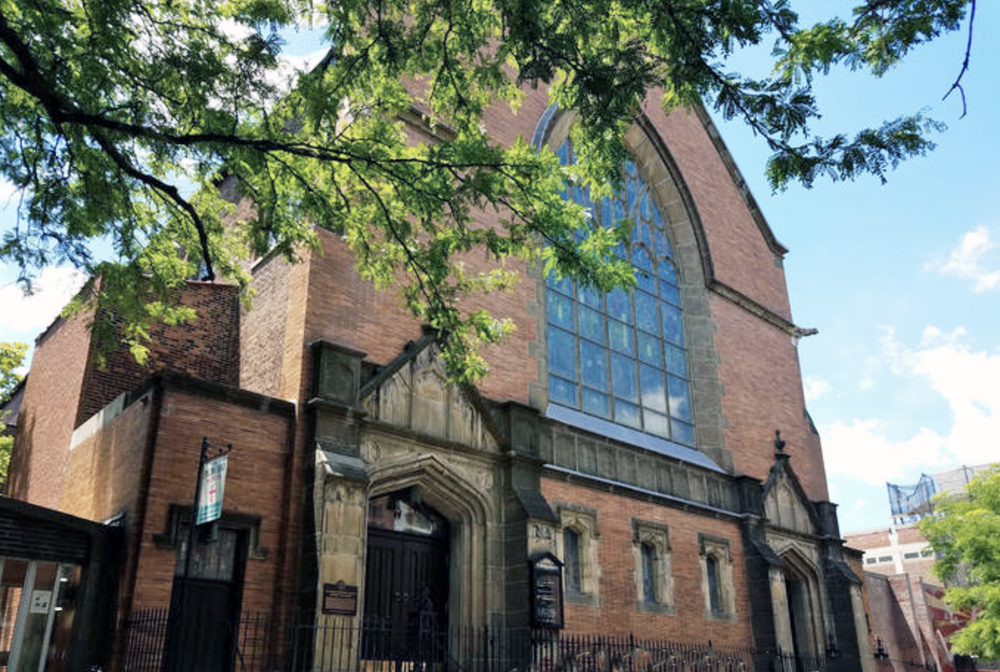
Saint Philip’s Episcopal Church in Harlem, New York, is an important landmark in Black American history and architecture. Designed by Tandy & Foster, the church was built between 1910 and 1911 in a Neo-Gothic style, featuring orange Roman brick and cast-stone details inspired by 14th-century English Gothic architecture.
Founded in 1809 by free Black Americans who originally worshiped at Trinity Church on Wall Street, the church moved several times before settling on West 134th Street in Harlem. The current building was dedicated on March 25, 1911, and has been a central place of worship and community ever since.
Saint Philip’s is not just a place of worship—it’s a symbol of resilience and strength. Recognized as a New York City Landmark and listed on the National Register of Historic Places, the church continues to serve its congregation and offers various social programs for the community.
Villa Lewaro

Villa Lewaro, also known as the Madam C.J. Walker estate, is a large mansion in Irvington, New York, about 30 miles from New York City. Built between 1916 and 1918, it was commissioned by Madam C.J. Walker, the first female self-made millionaire in the U.S., and designed by architect Vertner Tandy.
The mansion, in the Italianate style, has 34 rooms and covers 20,000 square feet. It was named “Lewaro” by opera singer Enrico Caruso, using the first two letters of Madam Walker’s daughter’s name. The villa was built to reflect Madam Walker’s success and status.
Villa Lewaro became a cultural hub, hosting important figures during the Harlem Renaissance, including W.E.B. Du Bois and Langston Hughes. After Madam Walker’s death in 1919, her daughter, A’Lelia Walker, continued to use it for social and cultural events.
The mansion was designated a National Historic Landmark in 1976. Today, Villa Lewaro stands as a symbol of Madam Walker’s achievements and Vertner Tandy’s architectural skill.
Service in World War I
Vertner Woodson Tandy had a notable military career. Unfortunately, the exact duration of his service is not well-documented. After passing the military commissioning exam, he became a First Lieutenant in the 15th Infantry of the New York State National Guard, making him the first Black American to hold this rank.
He trained at Fort Des Moines in Iowa for his officer duties. Tandy’s achievements were significant, breaking racial barriers in the military and paving the way for future Black American officers.
Founding of Alpha Phi Alpha Fraternity

In the early 20th century, Black American men faced many challenges and racism, creating a need for a supportive community that promoted academic success, leadership, and service. This led to the founding of Alpha Phi Alpha Fraternity, Inc. on December 4, 1906, at Cornell University in Ithaca, New York.
Vertner W. Tandy and six other students—Henry Arthur Callis, Charles Henry Chapman, Eugene Kinckle Jones, George Biddle Kelley, Nathaniel Allison Murray, and Robert Harold Ogle— saw the importance of building a strong brotherhood among Black Americans. These seven founders, known as the “Seven Jewels,” wanted to support each other in their academic and personal lives. The fraternity focused on promoting scholarship, service, and leadership. Tandy played a crucial role in the fraternity’s formation, serving as its first treasurer and designing the fraternity pin.
Alpha Phi Alpha has played a key role in the Black American community, addressing social issues, leading during times of crisis, and fighting for civil rights and justice. The fraternity quickly grew, establishing chapters at other universities and becoming a cornerstone of Black American collegiate life. Its members, like Martin Luther King Jr., W.E.B. Du Bois, and Thurgood Marshall, have made lasting impacts on the fight for equality.
The fraternity’s motto, “First of All, Servants of All, We Shall Transcend All,” reflects its commitment to service and improving the world. Today, Alpha Phi Alpha remains an important organization, with over 730 active chapters worldwide, dedicated to academic excellence, community service, and leadership.
Marriage and Children
Vertner Woodson Tandy married Sadie Dorsette in 1912. Sadie was the daughter of Cornelius N. Dorsette, a physician from Montgomery, Alabama. They had one son, Vertner Woodson Tandy Jr., who was born in 1921 and lived until 1996.
The Tandy family resided in Manhattan, New York City. Manhattan was not only Tandy’s home, but also the location of his architectural practice, and where he maintained his involvement with the Alpha Phi Alpha fraternity.
Death
Vertner Woodson Tandy continued practicing architecture in New York City, and stayed active in the field, designing important buildings and staying involved with Alpha Phi Alpha fraternity until his death on November 7, 1949 at the age of 64. He died at Harlem Hospital from pneumonia.
Tandy’s funeral was held at St. Philip’s Episcopal Church in Harlem on November 11, 1949. The church, which he had designed, was a fitting place for the service. The Rev. Shelton Hale Bishop officiated, and the service was simple and respectful, with many floral arrangements from those in attendance.
He is buried in Ferncliff Cemetery and Mausoleum in Hartsdale, Westchester County, New York.
Legacy and Impact
Contributions Beyond Architecture
Vertner Woodson Tandy was the first Black American licensed as an architect in New York State and an important leader in the Black American community. He was also one of the seven founders of Alpha Phi Alpha fraternity at Cornell University in 1906. Tandy served as the fraternity’s first treasurer, designed its pin, and helped with its incorporation, shaping its lasting legacy.
Alpha Phi Alpha’s Influence on Social Justice, Education, and Leadership
Since its founding in 1906, Alpha Phi Alpha has played a key role in promoting social justice, education, and leadership in the Black American community. The fraternity launched initiatives like the “Go-to-High School, Go-to-College” campaign to encourage education and college readiness among youth. Its members have also been active in the civil rights movement, supporting leaders like Martin Luther King Jr. and Thurgood Marshall.
Honors and Memorials
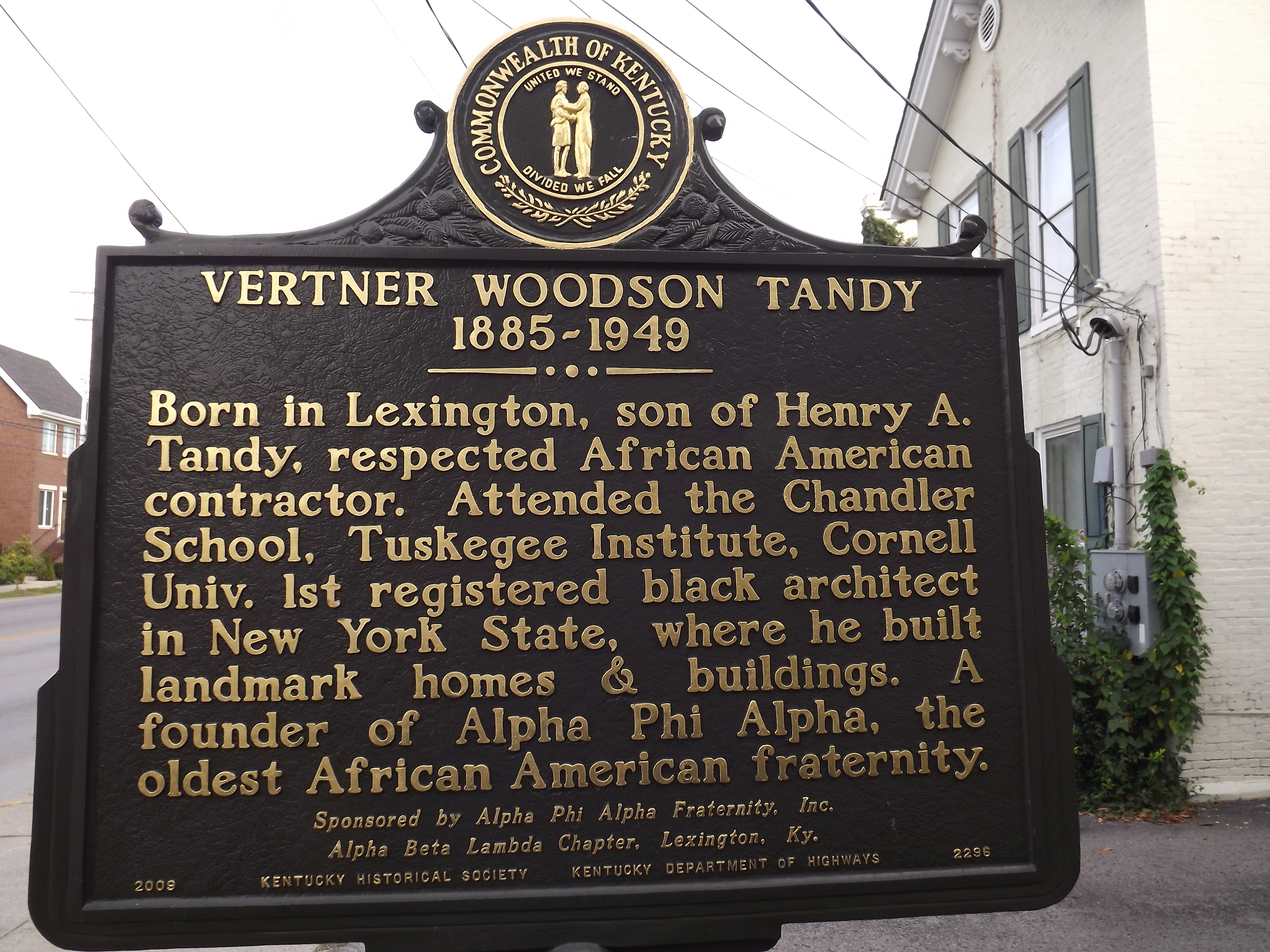
A historic marker honoring Vertner Woodson Tandy was placed in Lexington, Kentucky, by Alpha Phi Alpha. It recognizes his contributions to architecture and the fraternity. The fraternity also created awards and scholarships in his name to carry on his legacy of excellence and service.
Architectural Designs
Vertner Woodson Tandy designed many important buildings during his career. Here are some highlights:
- The Harlem Alhambra: A complex in Harlem that included a theater, ballroom, and retail spaces, serving as a cultural center in the early 1900s.
- 41st Precinct Station House and Stable: Built in the Bronx for the local police, showcasing Tandy’s architectural style.
- Abyssinian Baptist Church Parsonage: Located in Harlem and tied to the historic Abyssinian Baptist Church, an important institution in the Black American community.
- St. James Presbyterian Church: Another Harlem church that highlights Tandy’s skill in designing inspiring religious spaces.
Conclusion
Vertner Woodson Tandy Sr. made a lasting impact as a groundbreaking architect and a founder of Alpha Phi Alpha Fraternity, Inc. In a time of significant racial barriers, Tandy’s accomplishments were remarkable. He was the first licensed Black American architect in New York State, and his work included iconic designs like Villa Lewaro, the estate of Madam C.J. Walker, and St. Philip’s Episcopal Church in Harlem. These buildings remain symbols of Black American resilience and achievement.
Tandy’s influence went beyond architecture. As one of the seven founders of Alpha Phi Alpha, he helped establish a fraternity dedicated to scholarship, leadership, and service among Black American men. Founded in 1906 at Cornell University, Alpha Phi Alpha became a cornerstone for supporting its members and advancing civil rights and social justice.
Tandy’s personal life also reflected his dedication to family and community. He married Sadie Dorsette, and they had a son, Vertner Woodson Tandy Jr. Even as he balanced his professional successes, Tandy stayed committed to his work and community until his death in 1949.
Today, Tandy’s story serves as an inspiration. His achievements remind us of the importance of representation and the power of determination and innovation. By celebrating his contributions, we honor the role Black Americans have played in shaping architecture, culture, and progress. His legacy continues to uplift future generations, showing the enduring impact of a life dedicated to excellence and service.
Frequently asked questions about Vertner W. Tandy, Sr.
- Who was Vertner W. Tandy, Sr?
- Vertner Woodson Tandy was an important Black American architect and one of the seven founders of Alpha Phi Alpha Fraternity, Inc. at Cornell University in 1906. He made history as the first Black American architect registered in New York State. Some of his famous works include Villa Lewaro, the mansion of Madam C.J. Walker, and Saint Philip’s Episcopal Church in Harlem. Tandy also served in the New York State National Guard during World War I. His achievements continue to inspire in both architecture and fraternity life.
- What did Vertner W. Tandy contribute to architecture?
- Vertner W. Tandy was the first registered Black American architect in New York State. He designed key buildings like Villa Lewaro, the mansion of Madam C.J. Walker, and Saint Philip’s Episcopal Church in Harlem. His work made a lasting mark on architecture, especially in New York. Tandy’s contributions continue to be an important part of architectural history.
- What is the mission of Alpha Phi Alpha Fraternity?
- Alpha Phi Alpha Fraternity works to develop leaders, promote brotherhood and academic excellence, and provide service to the community. Its goal is to empower Black American men and uplift the community through these values.
- Why is Tandy’s legacy important today?
- Vertner W. Tandy’s legacy is significant today because he broke racial barriers as one of the first Black American architects and a founder of Alpha Phi Alpha Fraternity. The fraternity still promotes leadership, academic success, and service. Tandy’s achievements continue to inspire people to strive for excellence and make a positive impact on society.
- How has Alpha Phi Alpha Fraternity evolved since its founding?
- Since its founding in 1906, Alpha Phi Alpha Fraternity has grown to become the largest and oldest intercollegiate fraternity for Black Americans. It focuses on leadership, service, and advocacy. The fraternity has created several programs, including “Go-to-High School, Go-to-College,” Project Alpha, and the Martin Luther King Jr. Memorial Foundation, all aimed at addressing social issues and supporting both its members and the community.
Sources
- Who’s who in Colored America. United States: Who’s Who in Colored America Corporation, 1929. (Internet Archive)
- Garrett, Romeo B. Famous First Facts About Negroes. New York: Dover Publications, 1971. (Internet Archive)
- Wesley, Charles Harris. The History of Alpha Phi Alpha: A Development in Negro College Life. United States: Howard University Press, 1929.
- Mason, Herman. The Talented Tenth: The Founders and Presidents of Alpha. United States: Four-G Publishers, 1999.
- Anderson, Carson Anthony, Department of Architectural History, University of Virginia. 1982. “The Architectural Practice of Vertner W. Tandy: An Evaluation of the Professional and Social Position of a Black Architect.” https://libraetd.lib.virginia.edu/public_view/np193965k.
- Wikipedia contributors. 2024. “Vertner Woodson Tandy.” Wikipedia. November 24, 2024. https://en.wikipedia.org/wiki/Vertner_Woodson_Tandy.
- Wikipedia contributors. 2024. “Alpha Phi Alpha.” Wikipedia. November 1, 2024. https://en.wikipedia.org/wiki/Alpha_Phi_Alpha.
- Wikipedia contributors. 2024. “Villa Lewaro.” Wikipedia. November 19, 2024. https://en.wikipedia.org/wiki/Villa_Lewaro.
- Wikipedia contributors. 2024. “Tandy & Foster.” Wikipedia. May 1, 2024. https://en.wikipedia.org/wiki/Tandy_%26_Foster.
- Wikipedia contributors. 2024. “African-American Architects.” Wikipedia. November 25, 2024. https://en.wikipedia.org/wiki/African-American_architects.
- Okocha, Victor. 2021. “Vertner Woodson Tandy (1885-1949) •” November 27, 2021. https://www.blackpast.org/african-american-history/tandy-vertner-woodson-1885-1949/.
- “Tandy, Vertner W., Sr. · Notable Kentucky African Americans Database.” n.d. https://nkaa.uky.edu/nkaa/items/show/69.
- Harlem World Magazine. 2021. “The Legendary Vertner Woodson Tandy, the First African American Registered Architect in NY State.” September 28, 2021. https://www.harlemworldmagazine.com/the-legendary-vertner-woodson-tandy-the-first-african-american-registered-architect-in-ny-state/.
- “Alpha Phi Alpha Fraternity.” n.d. The Martin Luther King, Jr. Research and Education Institute. https://kinginstitute.stanford.edu/alpha-phi-alpha-fraternity.
- Todd, Tracie. 2024. “Brotherhood of Firsts: The Traditions and Legacy of Alpha Phi Alpha.” A&W Greek Shop. September 17, 2024. https://www.awgreekshop.com/blogs/news/brotherhood-of-firsts-the-traditions-and-legacy-of-alpha-phi-alpha.
- “Jewel Vertner Woodson Tandy.” 2013. Eastern Region of Alpha Phi Alpha Fraternity. November 14, 2013. https://www.alphaeast.com/history-of-alpha-phi-alpha/jewel-vertner-woodson-tandy/.
- “Vertner Woodson Tandy (1885-1949) | WikiTree FREE Family Tree.” 1885. May 17, 1885. https://www.wikitree.com/wiki/Tandy-678.
- “Vertner Woodson Tandy – Ancestry®.” n.d. https://www.ancestry.com/genealogy/records/vertner-woodson-tandy-24-q0l41l.
- Alpha Phi Alpha. 2023. “Our History – Alpha Phi Alpha.” May 11, 2023. https://apa1906.net/our-history/.
- Kissinger, Michael. 2020. “St. Philip’s Protestant Episcopal Church, New York City, New York (1809- ) •” December 23, 2020. https://www.blackpast.org/african-american-history/st-philip-s-protestant-episcopal-church-new-york-city-1809/.
- HDC. 2018. “Saint Philip’s Protestant Episcopal Church | HDC.” HDC |. August 12, 2018. https://hdc.org/buildings/saint-philips-protestant-episcopal-church/.
- Find a Grave, database and images (https://www.findagrave.com/memorial/195643729/vertner_woodson-tandy: accessed December 3, 2024), memorial page for Vertner Woodson “Jewel” Tandy (17 May 1885–7 Nov 1949), Find a Grave Memorial ID 195643729, citing Ferncliff Cemetery and Mausoleum, Hartsdale, Westchester County, New York, USA; Maintained by Caroline Hoag (contributor 47311287).
© 2026 Chandra Martin. All Rights Reserved.
All original research, writing, analysis, and historical synthesis on this site is the intellectual property of Chandra Martin. This content may not be copied, reproduced, republished, distributed, adapted, or used in any form—digital or print—without prior written permission from the author.
Limited quotation for academic or educational purposes is permitted only if proper credit is given and the use does not alter the meaning, context, or integrity of the work.
To request permission for use in publications, videos, courses, educational materials, or digital media, please
contact:
Contact
Include:
- Your name
- The specific content you wish to use
- How and where it will be used
- Whether the use is commercial or non-commercial
All requests will be reviewed on a case-by-case basis.
 Chandra Martin